City sampler
Journal / Pologne / Wrocław
PLPologne · Wrocław · 6 septembre 2026

Wroclaw, architectural perspectives.

18 photos
Illustré: Architecture à Wroclaw

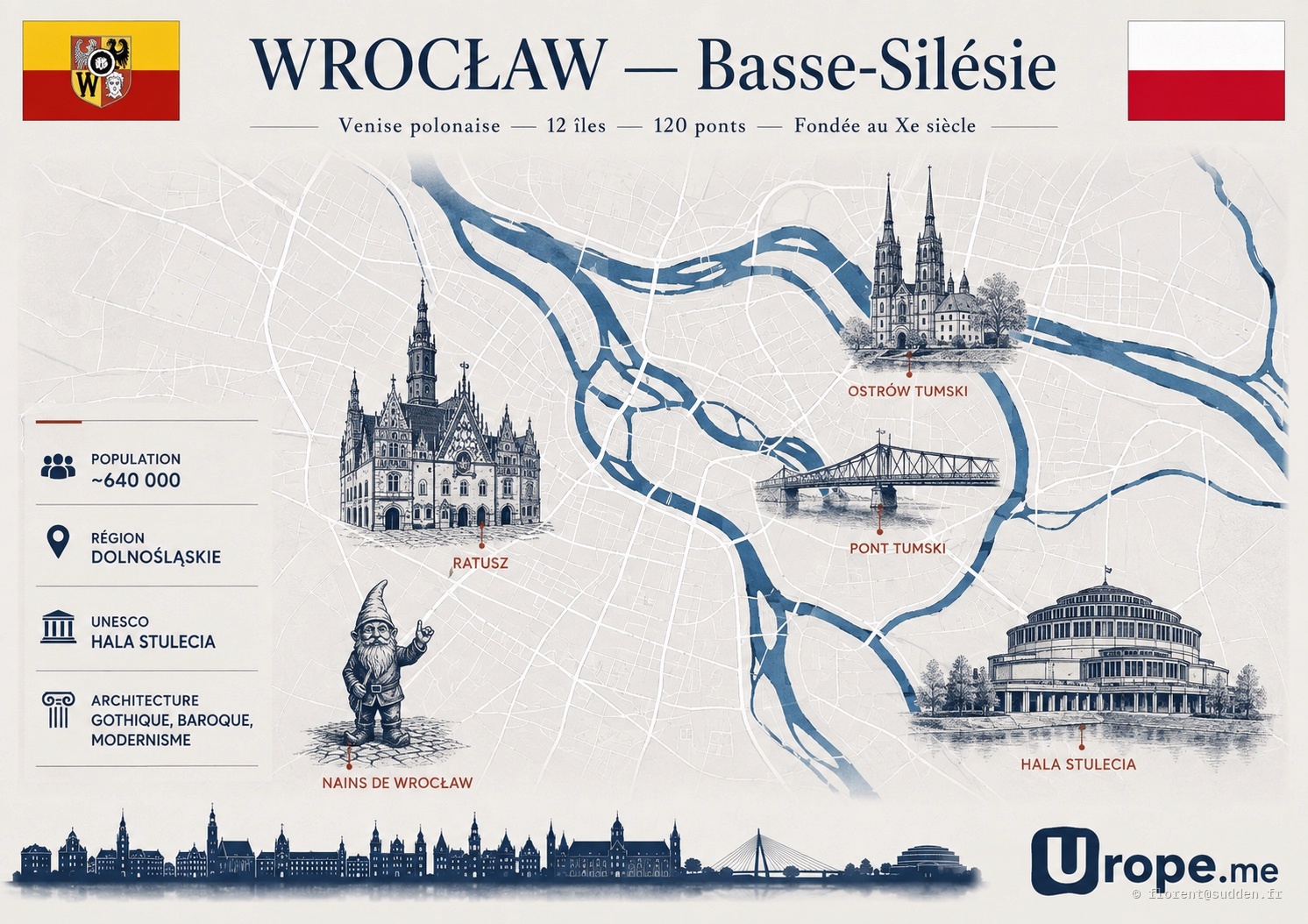
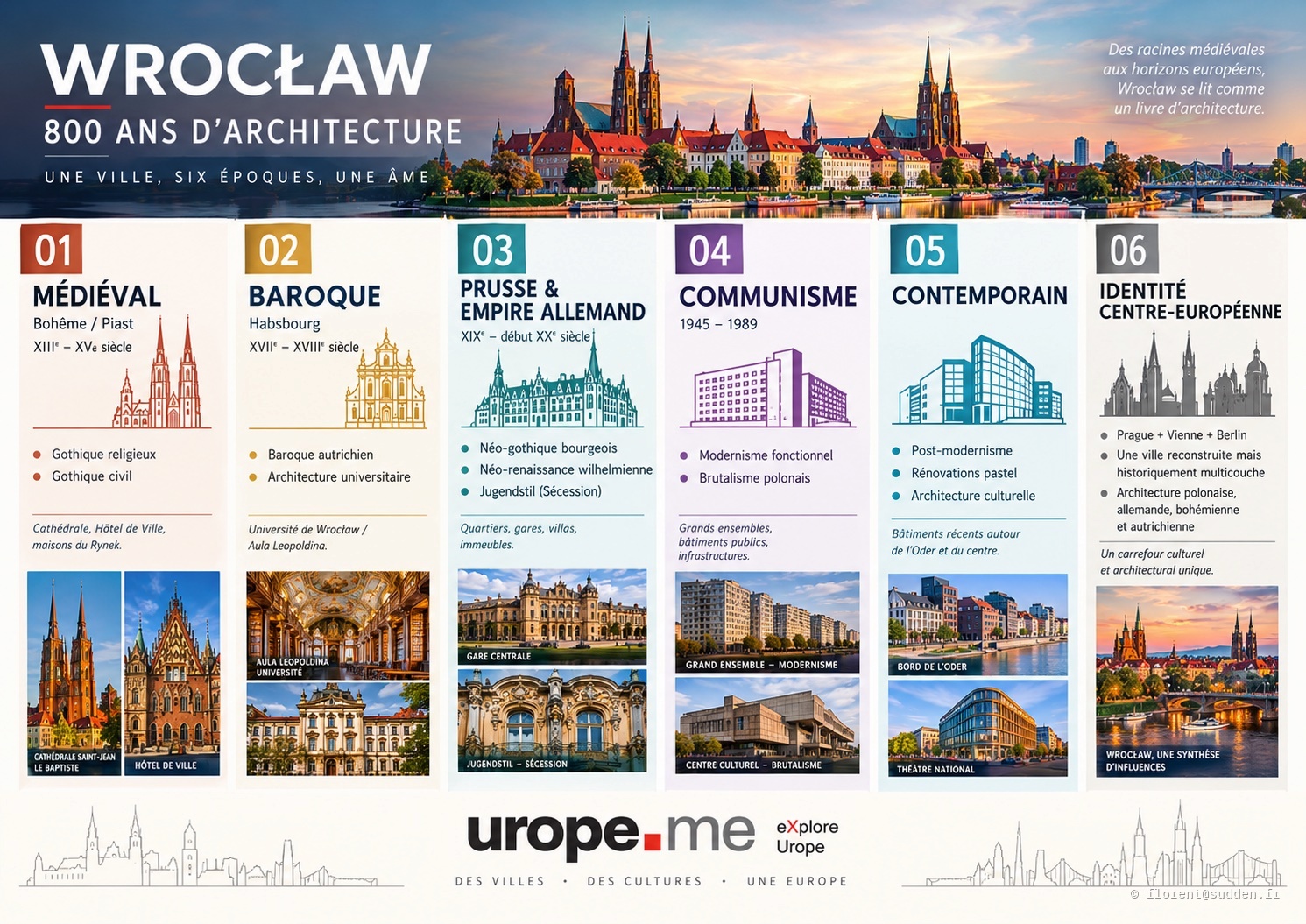
Wrocław, 800 years of architecture: one city, six epochs, one soul

Wrocław reads like an open-air architectural book. Each era left its mark, never erasing the previous one.

It all begins in the Middle Ages (13th-15th century). Under the Piasts and Bohemia, the city acquires its first Gothic jewels: the Cathedral of Saint John the Baptist, the Town Hall and the houses of the Rynek. Red brick and stone dominate, solemn and vertical.

Then comes the Baroque (17th-18th century), brought by the Habsburgs. Wrocław University and especially the Aula Leopoldina embody this period: gilded stucco, sumptuous frescoes, Austrian theatricality. The city opens to elegance and light.

The 19th and early 20th centuries mark the Prussian and German imprint. Bourgeois neo-Gothic, Wilhelmine neo-Renaissance and Jugendstil (Secession) flourish. Stations, villas, apartment buildings and sculpted facades tell the story of Breslau's prosperity, then one of the great cities of the German Empire.

After 1945, communism imposes functional modernism and Polish brutalism. Large housing complexes, massive public buildings and pragmatic infrastructure reshape the peripheries. Even in this rigor, Wrocław preserves a certain humanity.

Since the 1990s, the contemporary has asserted itself: post-modernism, pastel renovations, cultural architecture along the Oder. The National Theatre, riverside buildings and recent interventions dialogue with the past without contradicting it.

Today, Wrocław is neither purely Polish, nor German, nor Austrian. It is a unique Central European synthesis: Prague, Vienna and Berlin meet here. A reconstructed, multilayered city that bears all its strata within it… and continues to write its next chapter.
18 photos

Illustré: Architecture à Wroclaw
Unidentified location Coordinates located in the Gądów district in Wrocław, Szybowcowa street. No specific monument or point of interest recognizable at this address. © florent@sudden.fr 2026-09-07 · 21:34 · 51.1263° N, 16.9782° E
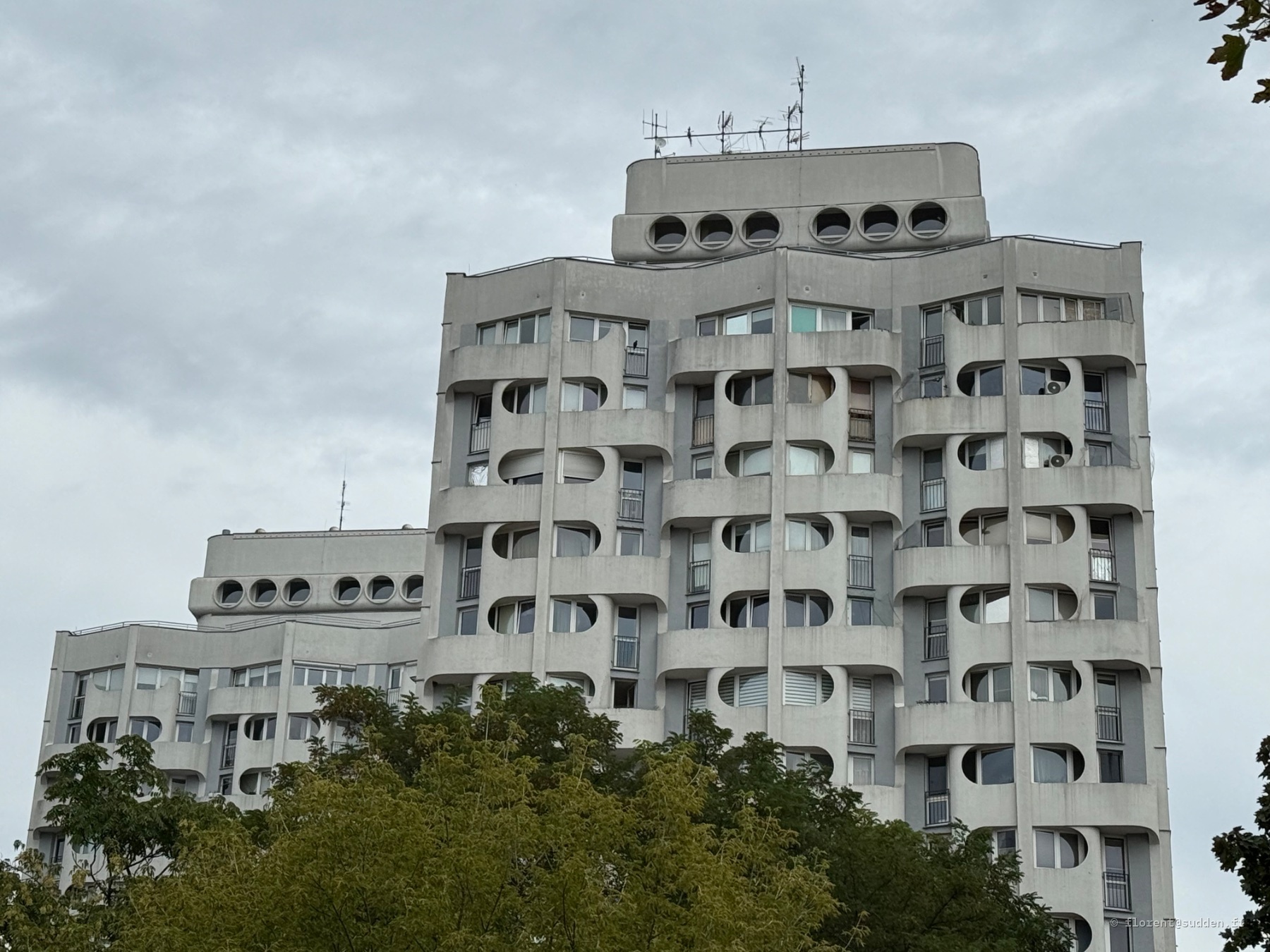
Immeuble brutaliste, Plac Grunwaldzki, Wrocław
Modernist Building, Plac Grunwaldzki, Wrocław Set of residential buildings with modernist architecture characteristic of the 1960s-70s, located at Plac Grunwaldzki. The concrete facades feature distinctive rounded balconies and circular openings. This architectural style reflects post-war urbanism in Poland. © florent@sudden.fr 2026-09-07 · 11:36 · 51.1103° N, 17.0549° E
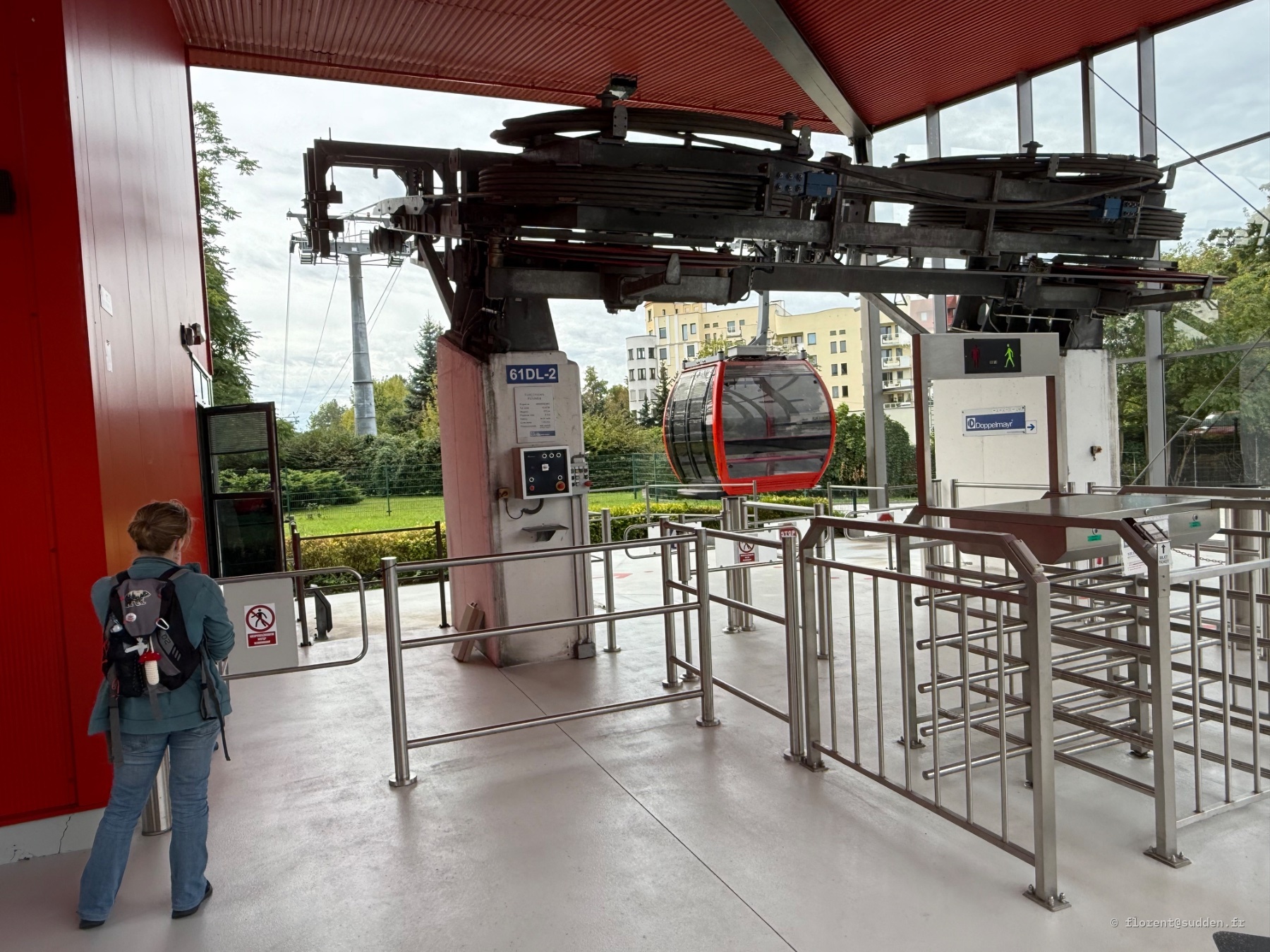
Téléphérique de Wrocław, station Grunwald
Wrocław Cable Car, Grunwald Station Starting station of the urban cable car (Kolejka Linowa) located in Wrocław, Poland. Installed in 2012, this system connects Plac Grunwaldzki district to the heights of the city, offering a panoramic view of the Vistula and the urban area. © florent@sudden.fr 2026-09-07 · 12:00 · 51.1073° N, 17.0585° E
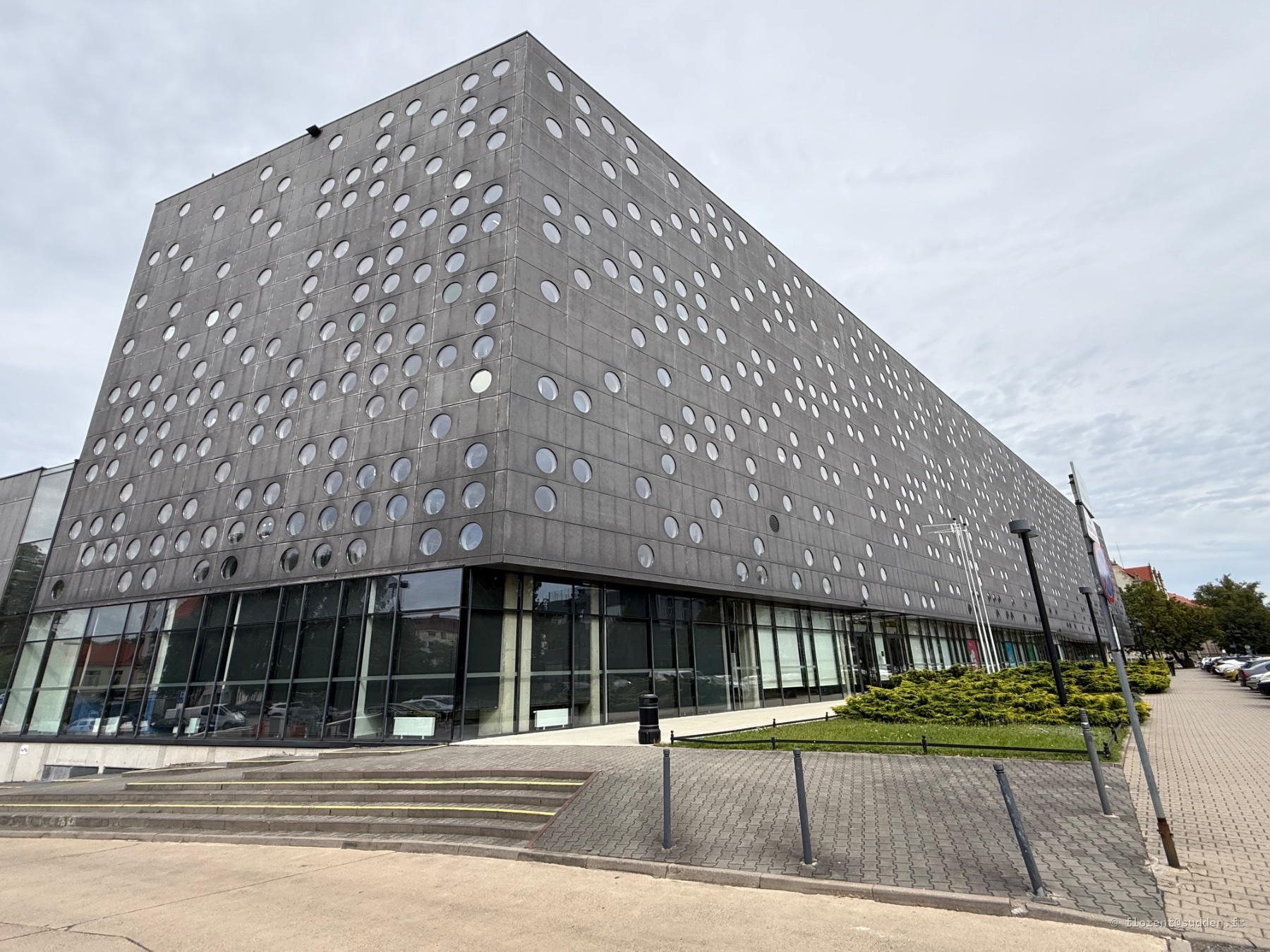
Bâtiment Centre-Ville Wrocław
Downtown Wrocław Building Contemporary building located on the banks of the Oder River (Wybrzeże Wyspiańskiego), near Plac Grunwaldzki in Wrocław. Modern architecture characterized by a perforated façade with circular portholes, probably dating from the 2000s-2010s. © florent@sudden.fr 2026-09-07 · 12:02 · 51.1072° N, 17.0589° E
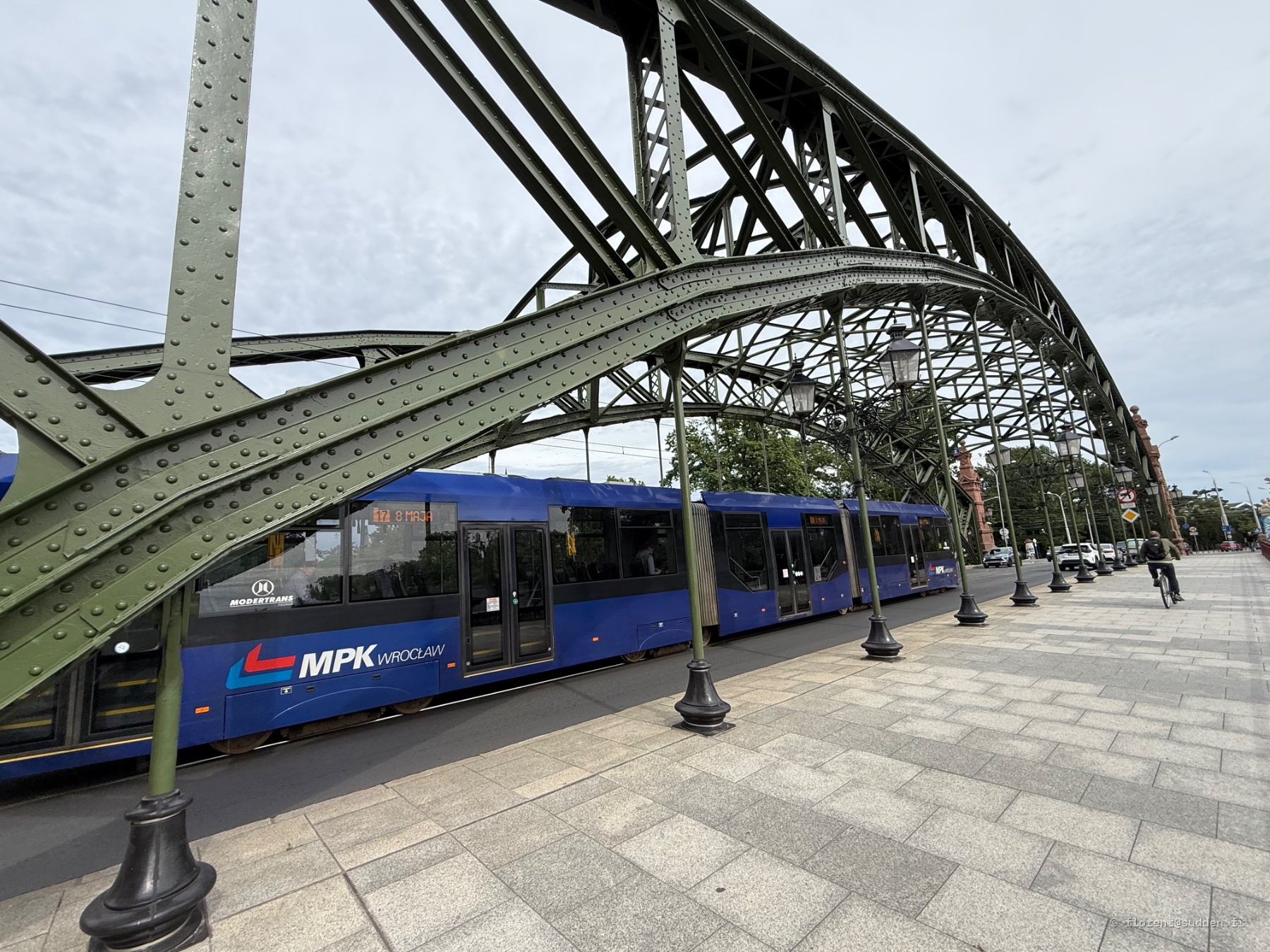
Pont Zwierzyniecki, Wrocław
Zwierzyniecki Bridge, Wrocław Historic 19th-century metal beam railway bridge spanning Plac Grunwaldzki street. The photo shows an MPK Wrocław tram passing under its characteristic riveted steel lattice structure, illustrating the coexistence of modern urban transport with Wrocław's historic railway infrastructure. © florent@sudden.fr 2026-09-07 · 12:20 · 51.1082° N, 17.0694° E
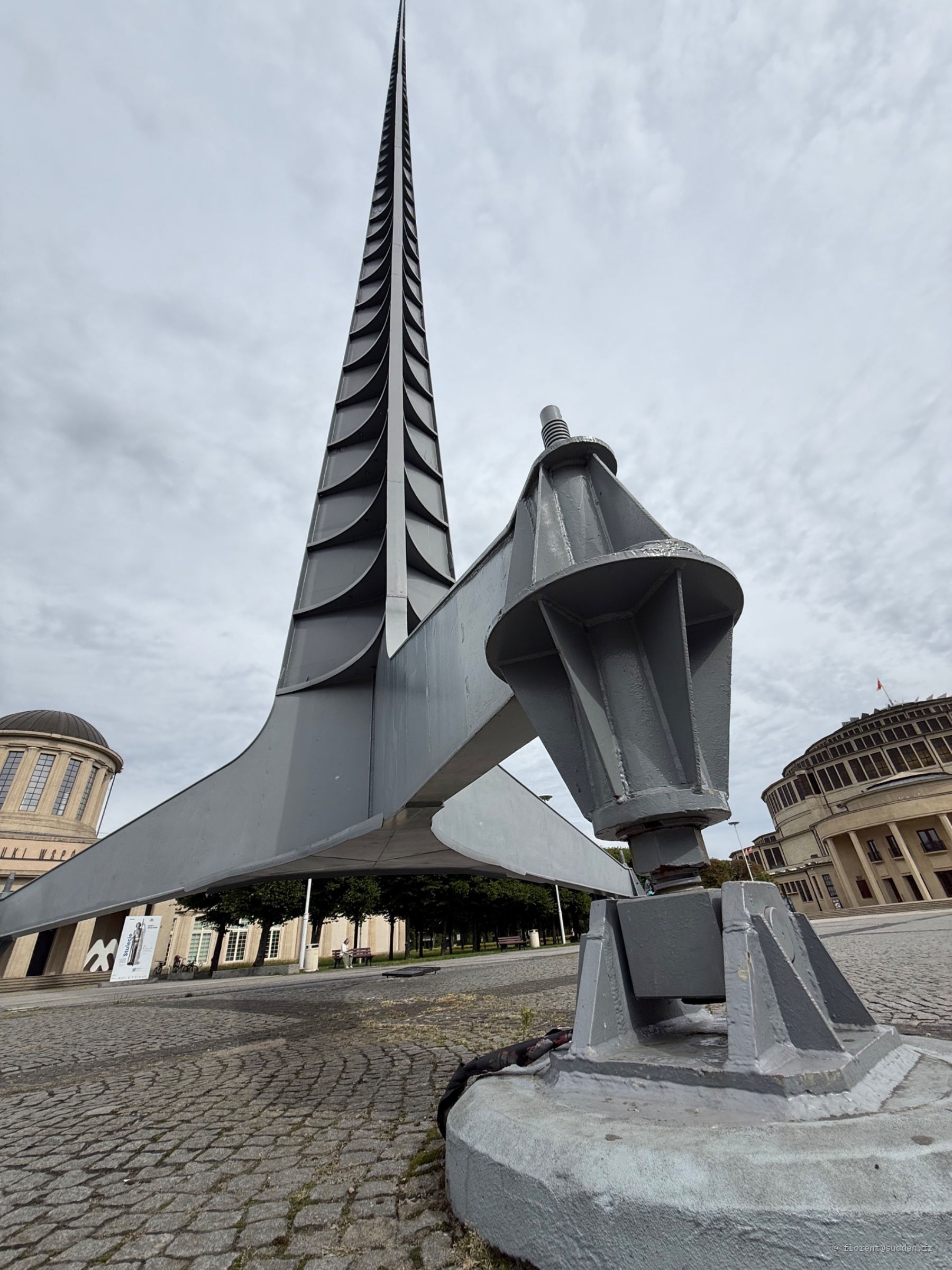
L’Iglica, l’aiguille de Wrocław
Millennium Chapel, Wrocław Commemorative monument located in Dąbie, Wrocław, built to celebrate the millennium of Christianity in Poland (966-1966). Modern architecture characteristic of the 1960s, with its distinctive spire and sundial integrated into the design. © florent@sudden.fr 2026-09-07 · 12:28 · 51.1075° N, 17.0753° E
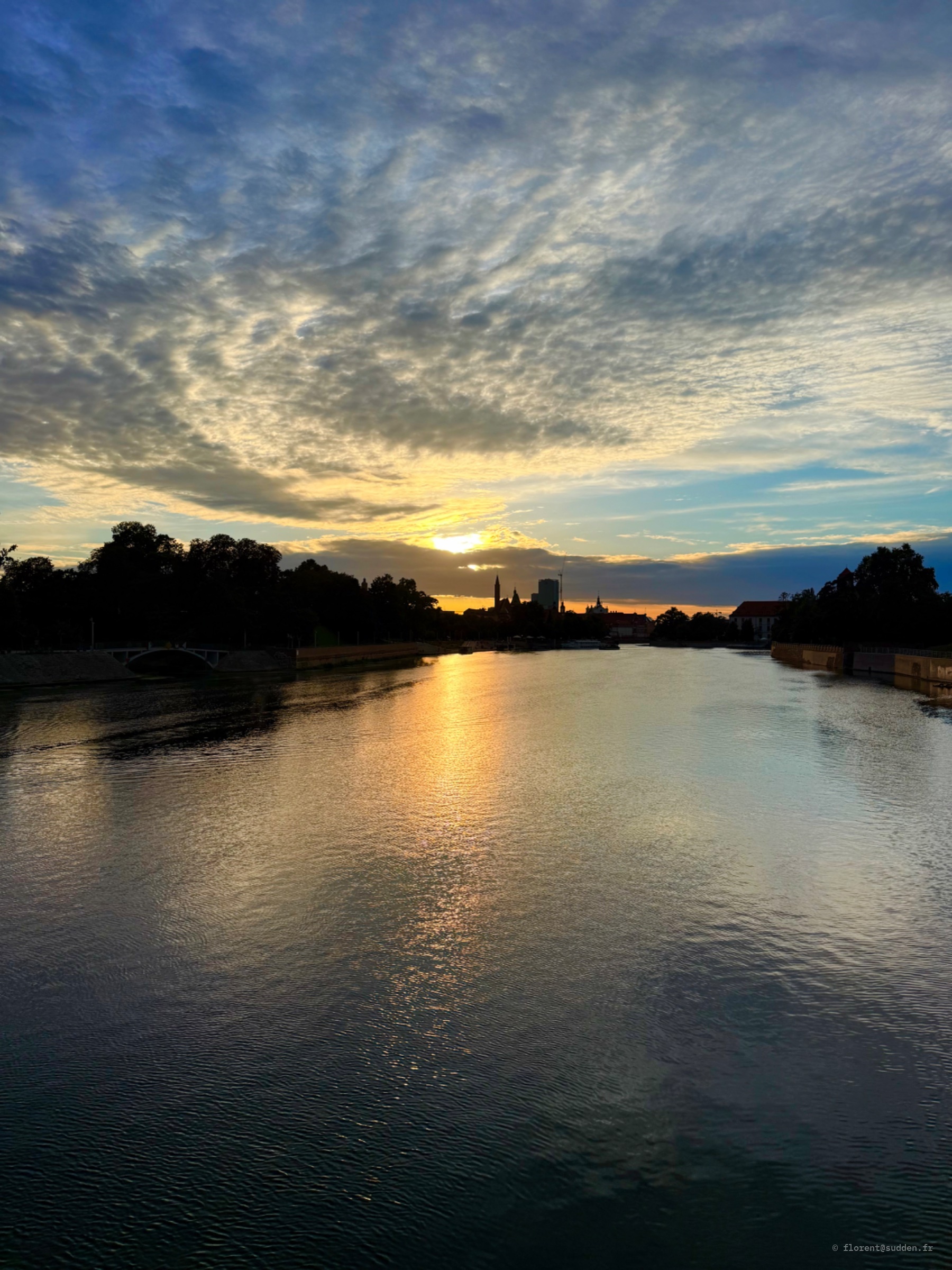
Pont de la Paix, Wrocław
Peace Bridge, Wrocław View from Most Pokoju (Peace Bridge) over the Oder in Wrocław, with the Old Town in the background. This bridge connects the Stare Miasto district to the other banks of the river in the historic city center. © florent@sudden.fr 2026-09-07 · 16:49 · 51.1120° N, 17.0492° E
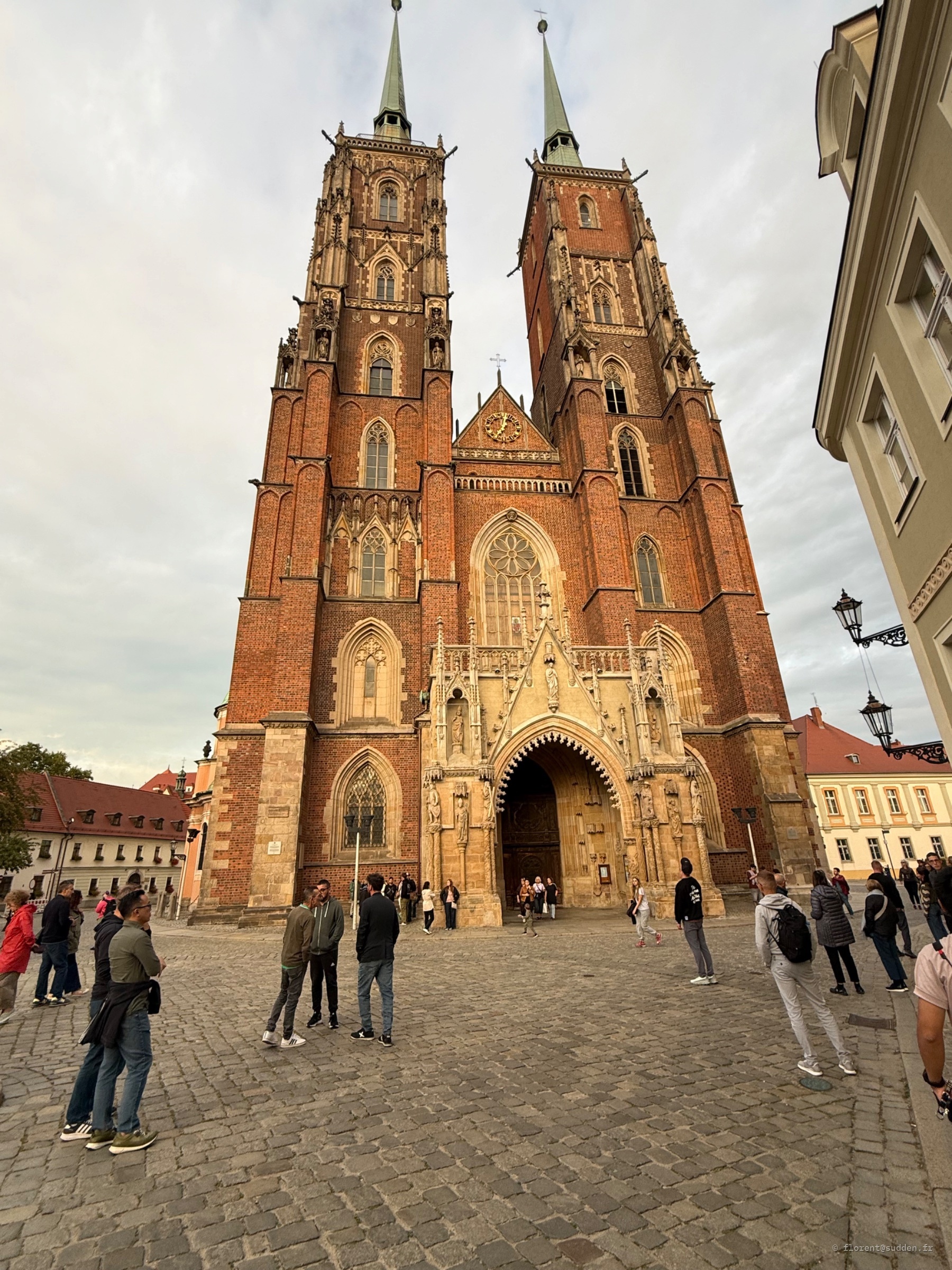
Cathédrale Sainte-Élisabeth de Wrocław
St. Elizabeth Cathedral in Wrocław Major Gothic church in the Stare Miasto (Old Town) district of Wrocław, built from the 14th century onwards. Characterized by its two distinctive towers and red brick facade with an ornate portal, it dominates Cathedral Square. © florent@sudden.fr 2026-09-07 · 16:58 · 51.1141° N, 17.0455° E
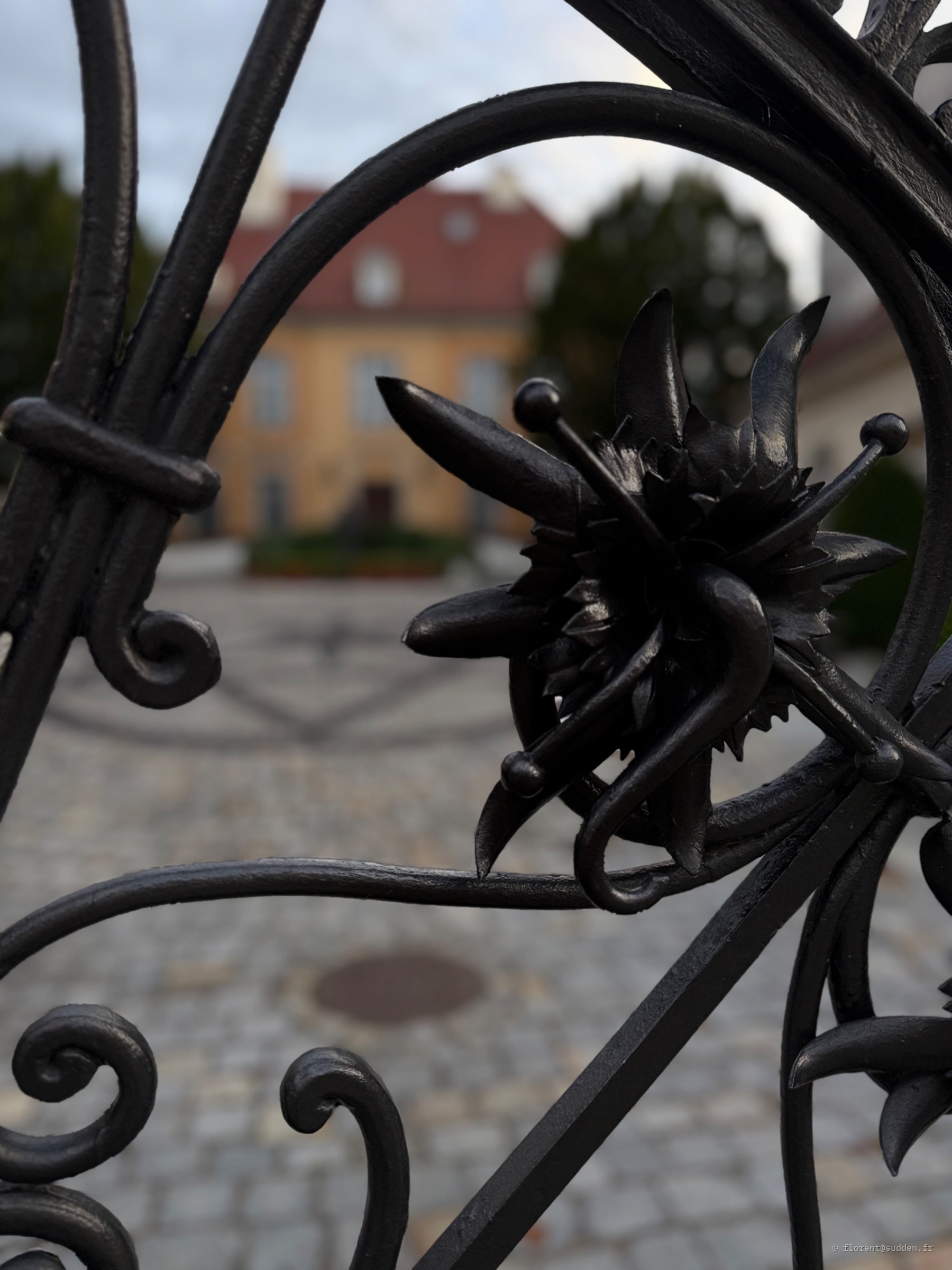
Grille ornementale, Stare Miasto Wrocław
Ornamental grille, Stare Miasto Wrocław Detail of a black wrought iron grille in the Old Town (Stare Miasto) of Wrocław, Katedralna Street. The baroque architecture visible in the background and the medieval paving characterize this historic district, the city's center since the Middle Ages. © florent@sudden.fr 2026-09-07 · 17:00 · 51.1143° N, 17.0446° E
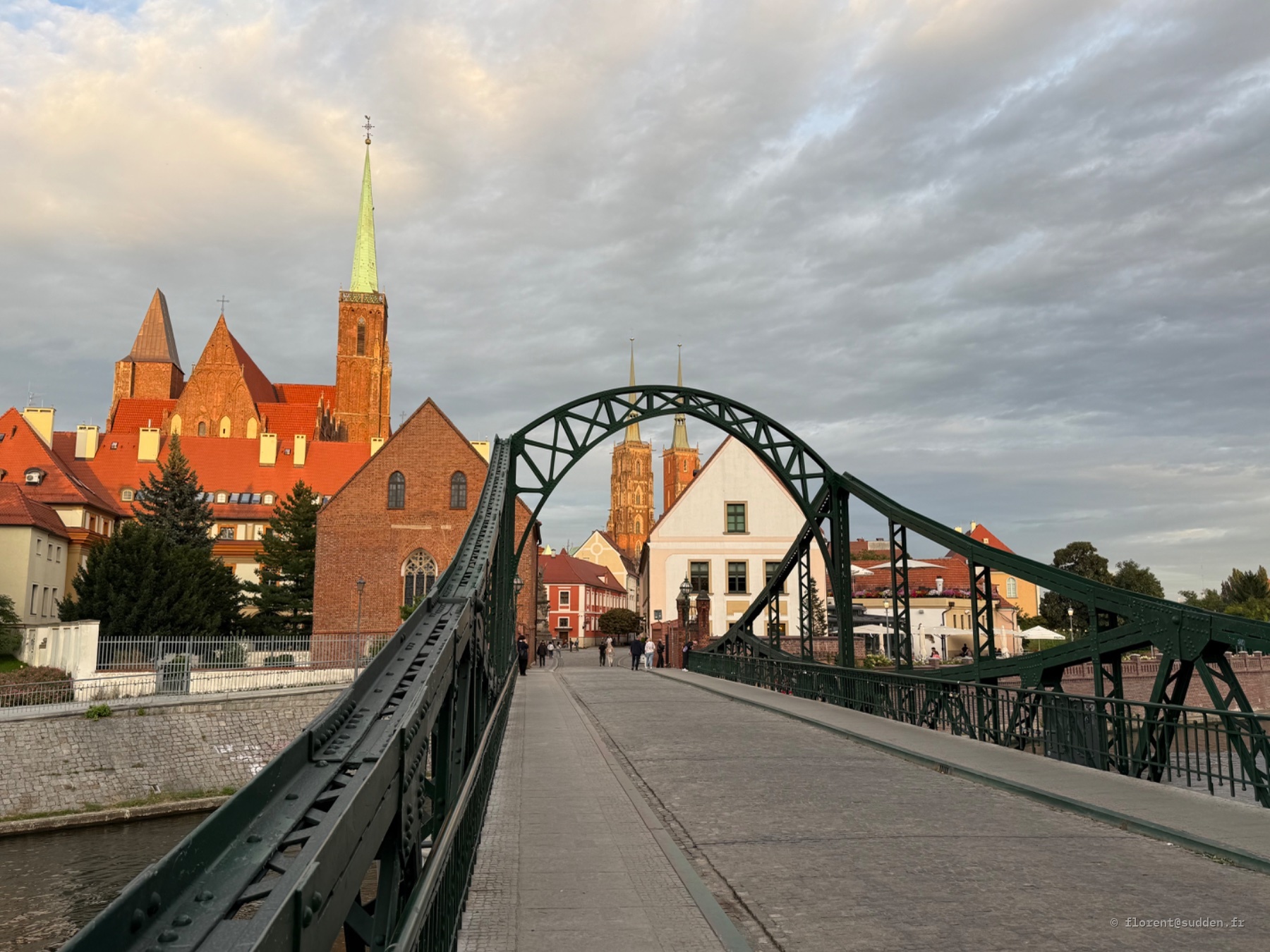
Most Tumski, Wrocław
Most Tumski, Wrocław Lattice steel bridge spanning the Oder River in the Stare Miasto (Old Town) district of Wrocław. View of Wrocław Cathedral with its characteristic red brick towers and roof covered with glazed tiles in the background. © florent@sudden.fr 2026-09-07 · 17:05 · 51.1148° N, 17.0420° E
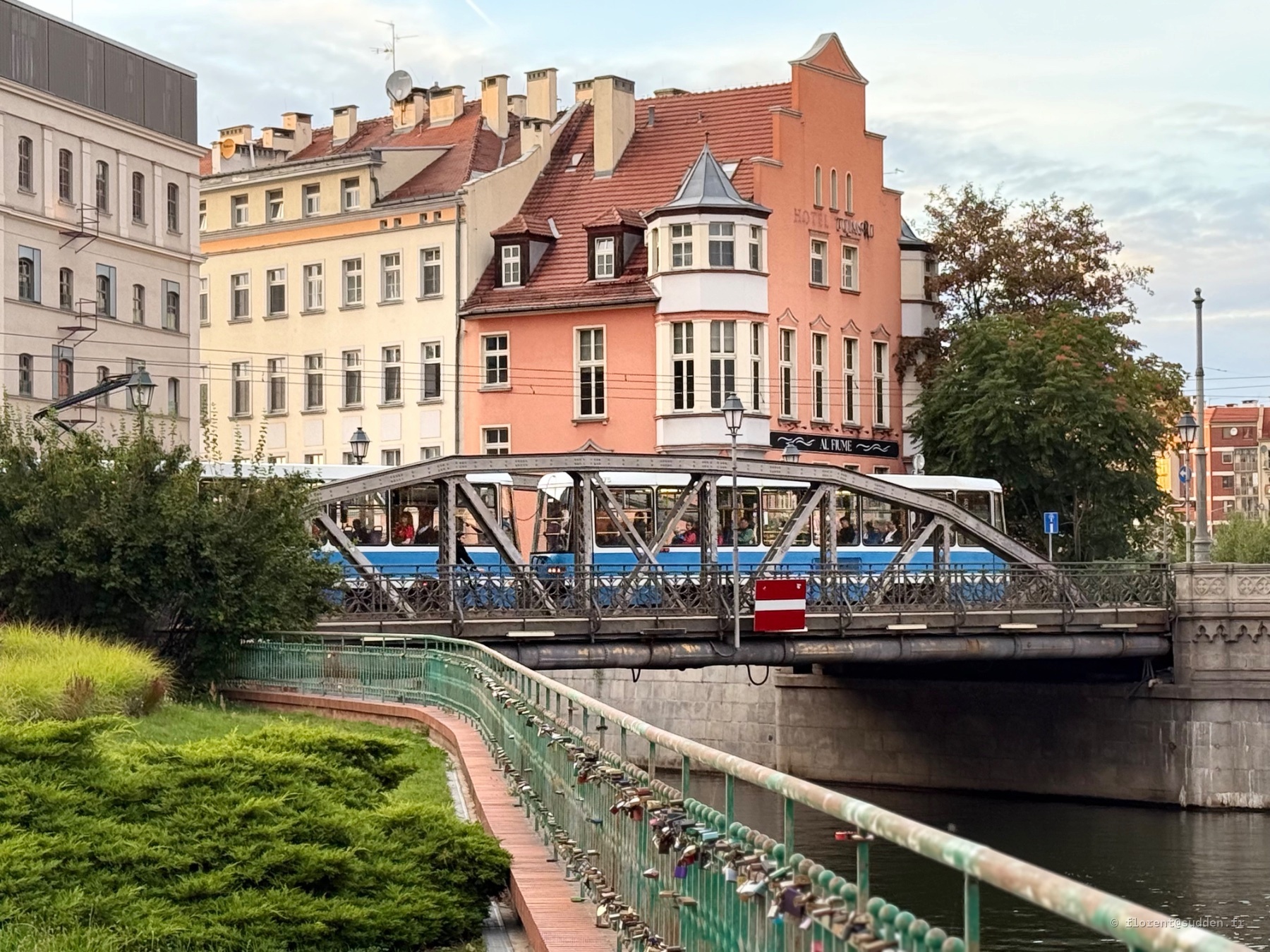
Pont et tramway, Wrocław
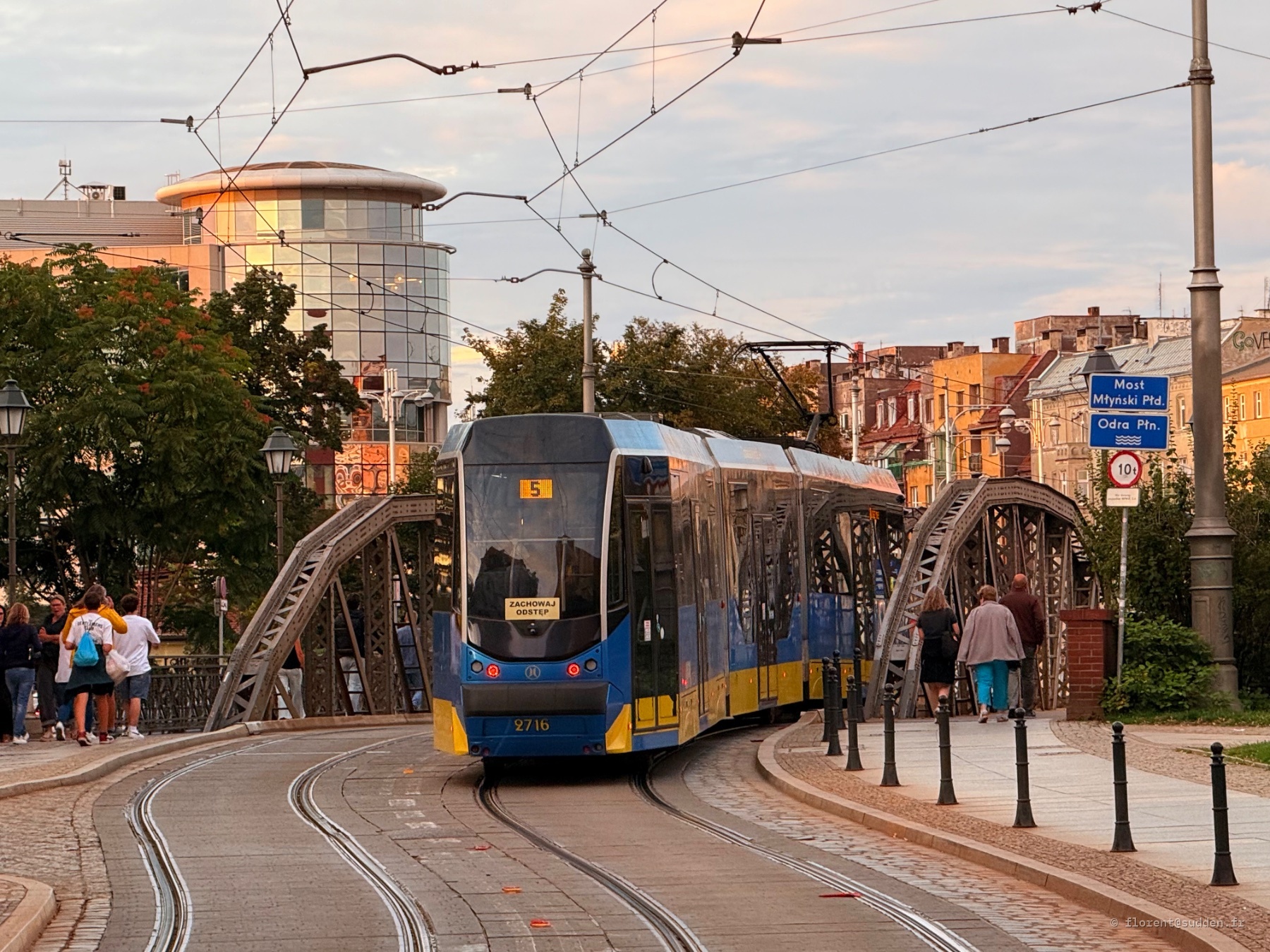
Bridge and tram, Wrocław Scene from Wrocław's historic center showing a blue tram crossing a metal bridge over the Oder River, with the colorful buildings of Stare Miasto in the background. The city's old quarter is characterized by this Central European architecture and its waterways. © florent@sudden.fr 2026-09-07 · 17:07 · 51.1151° N, 17.0416° E
Tramway sur pont Most Miłyński à Wrocław
Tramway on Miłyński Bridge in Wrocław The Miłyński Bridge spans the Oder River in the historic Stare Miasto (Old Town) district of Wrocław. This railway bridge with characteristic metal structure is one of the emblematic elements of the city's tramway network, dating from the Breslau era. © florent@sudden.fr 2026-09-07 · 17:10 · 51.1150° N, 17.0408° E
Fontaine Plac Uniwersytecki, Wrocław
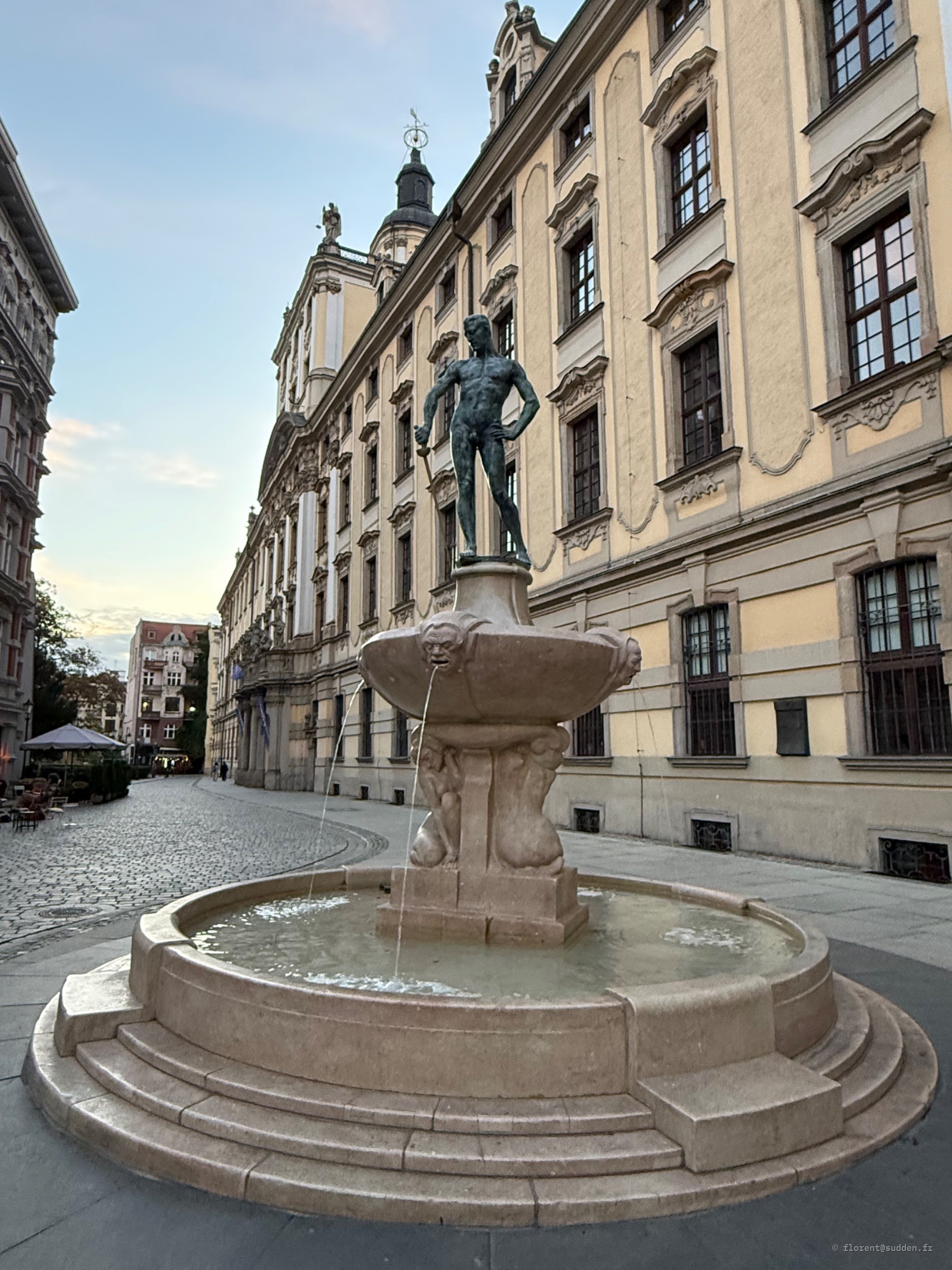
Fountain Plac Univerzytecki, Wrocław Fountain located on University Square (Plac Uniwersytecki) in the Old Town of Wrocław. The bronze statue depicts a nude man on an ornate pedestal, surrounded by a circular fountain, in front of historic classical-style buildings. © florent@sudden.fr 2026-09-07 · 17:27 · 51.1139° N, 17.0342° E
Rynek de Wrocław, Vieille Ville
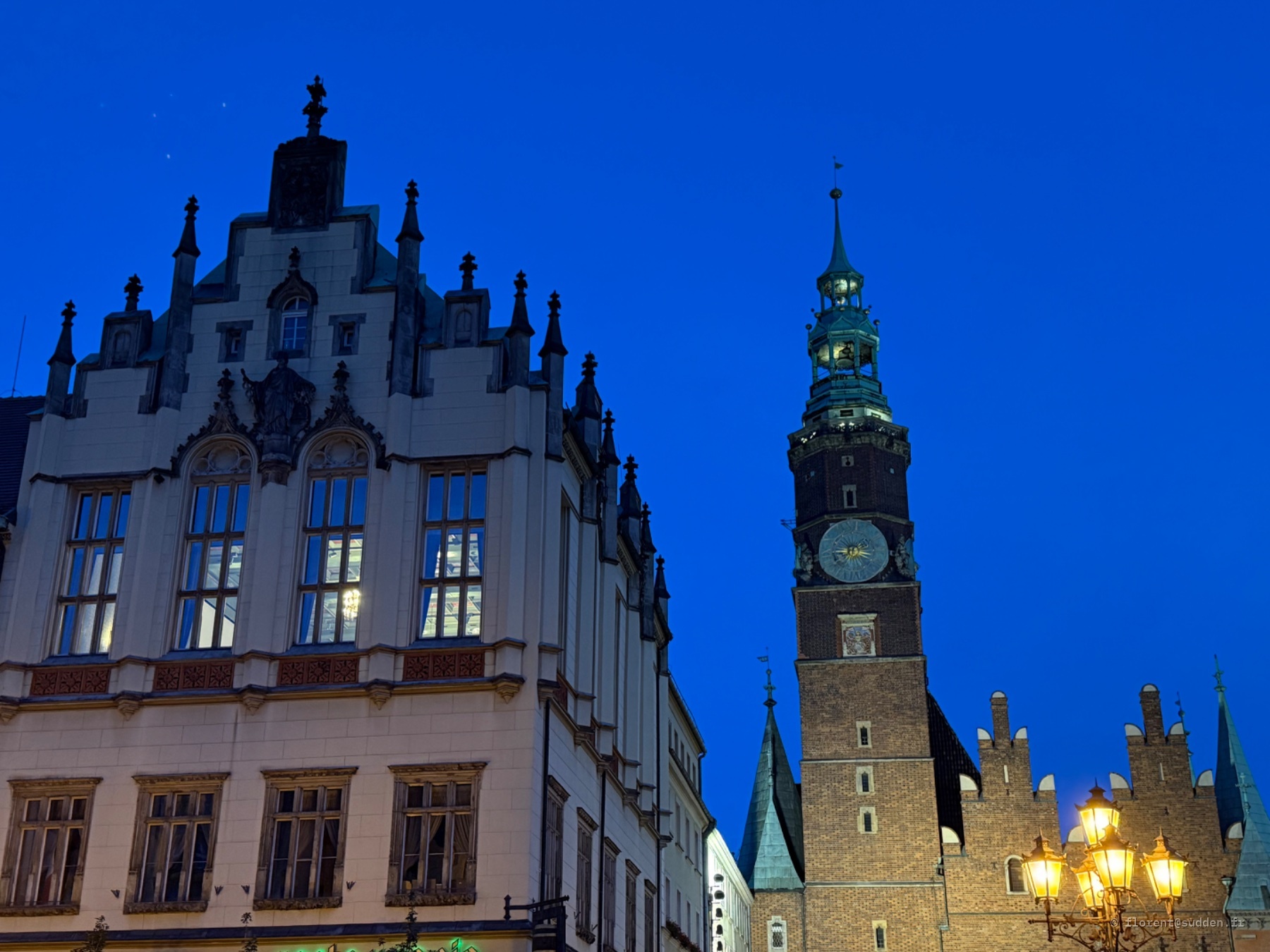
Rynek of Wrocław, Old Town The historic market square of Wrocław with the Gothic town hall (on the left) and the Church of Saint Mary Magdalene (on the right). Located in the heart of the Stare Miasto district, this site has been the administrative and cultural center of the city since the Middle Ages. © florent@sudden.fr 2026-09-07 · 17:46 · 51.1100° N, 17.0306° E
Dworzec Świebodzki // Hala Świebodzki bar & food court
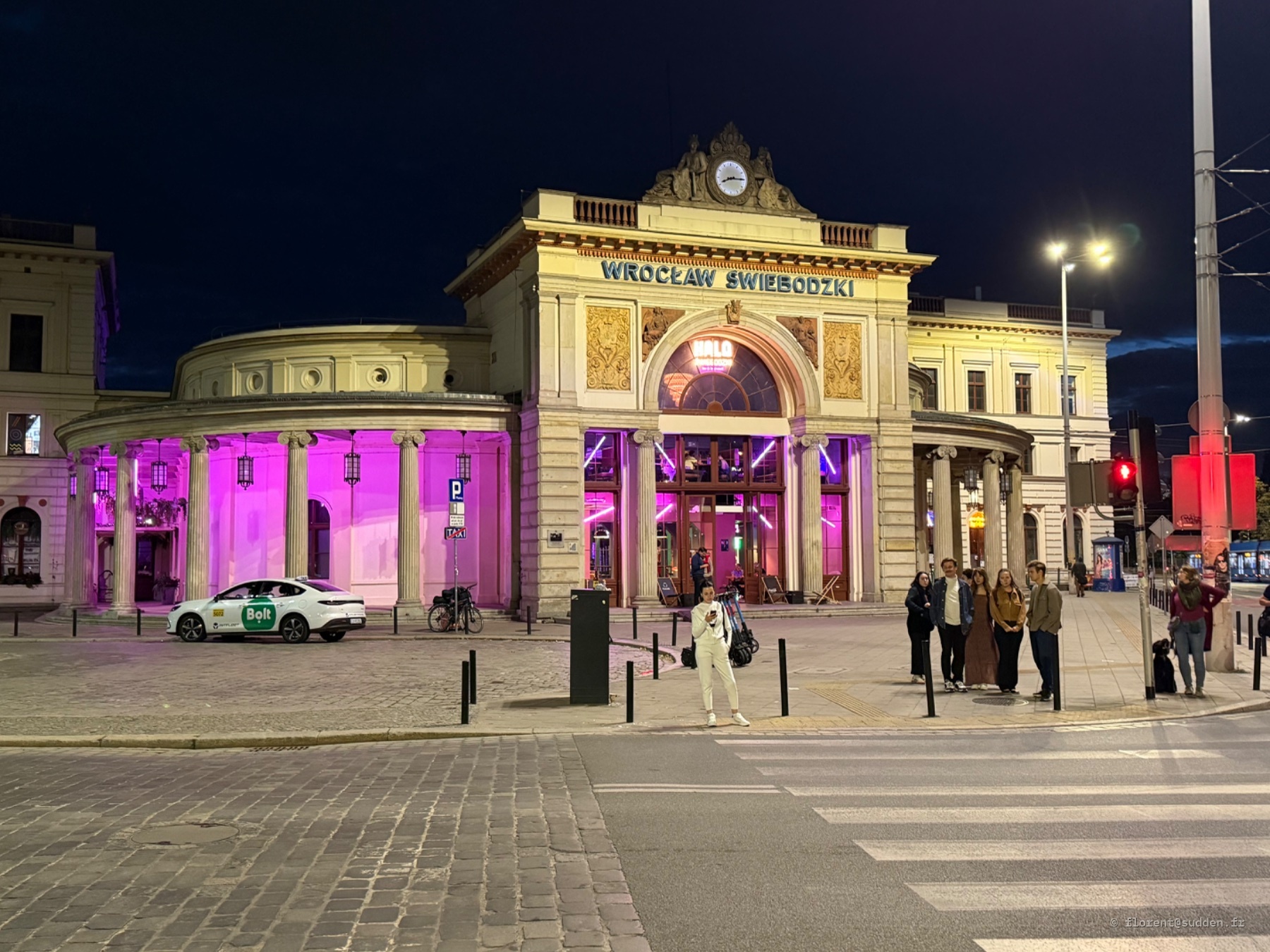
Dworzec Świebodzki // Hala Świebodzki bar & food court Hala Świebodzki bar & food court is the first food court in Wrocław. The space within the Hall is occupied by well-known Wrocław culinary concepts as well as new projects. The food court solves the eternal problem of choosing a meeting place and the type of cuisine that everyone craves. From now on, in one location, you will find diverse culinary options. The Hall cares about both culinary and artistic experiences. Events, fairs, and many other artistic initiatives are organized within its space. © florent@sudden.fr 2026-09-07 · 18:13 · 51.1079° N, 17.0208° E
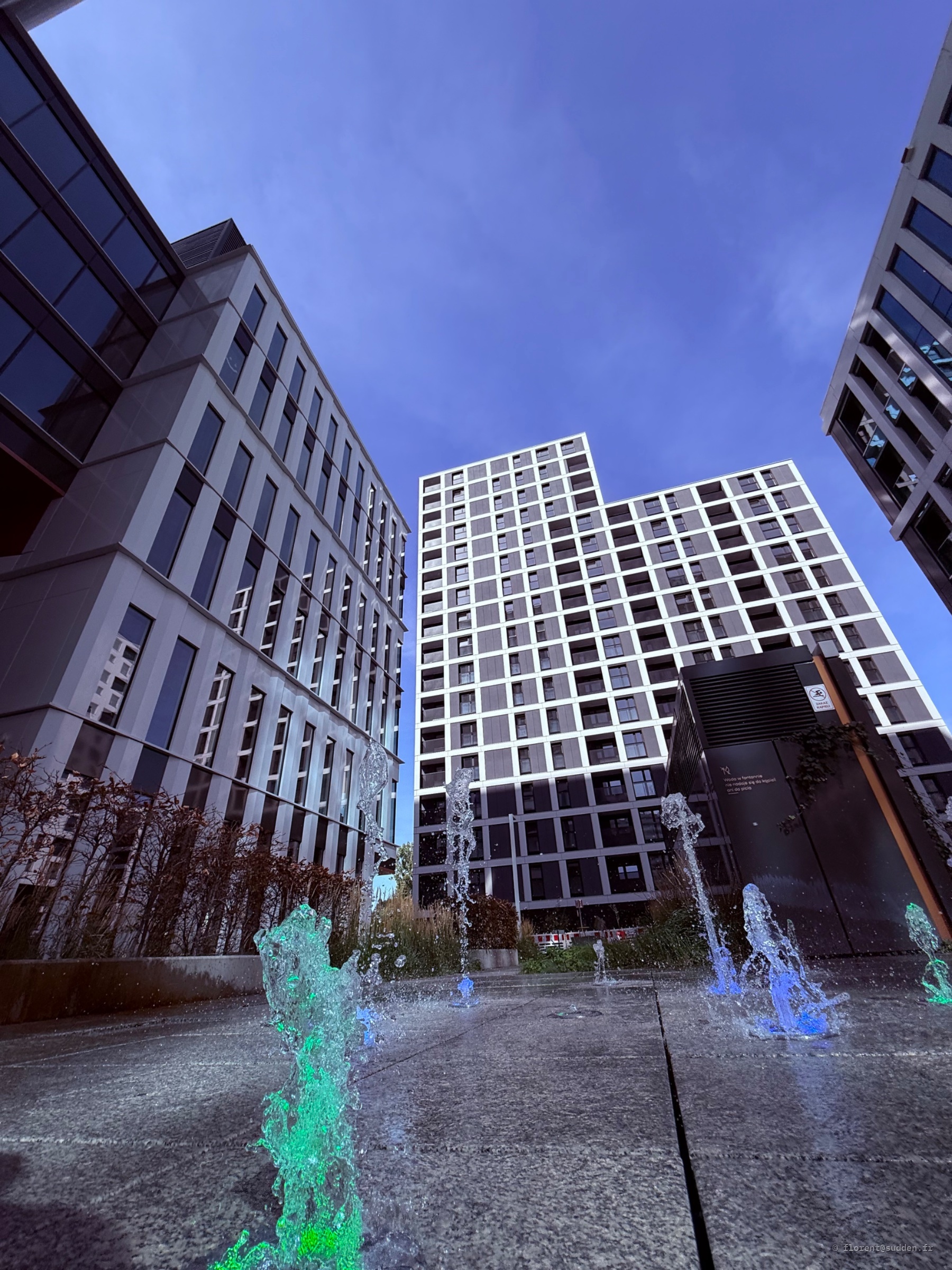
Quartier Powstańców Śląskich, Wrocław
Powstańców Śląskich District, Wrocław Modern residential complex in the Powstańców Śląskich district in Wrocław, Poland. Contemporary buildings with regular facades dominate the square, illuminated at night by colorful light installations (green and blue) on the ground. © florent@sudden.fr 2026-09-08 · 09:51 · 51.0961° N, 17.0217° E
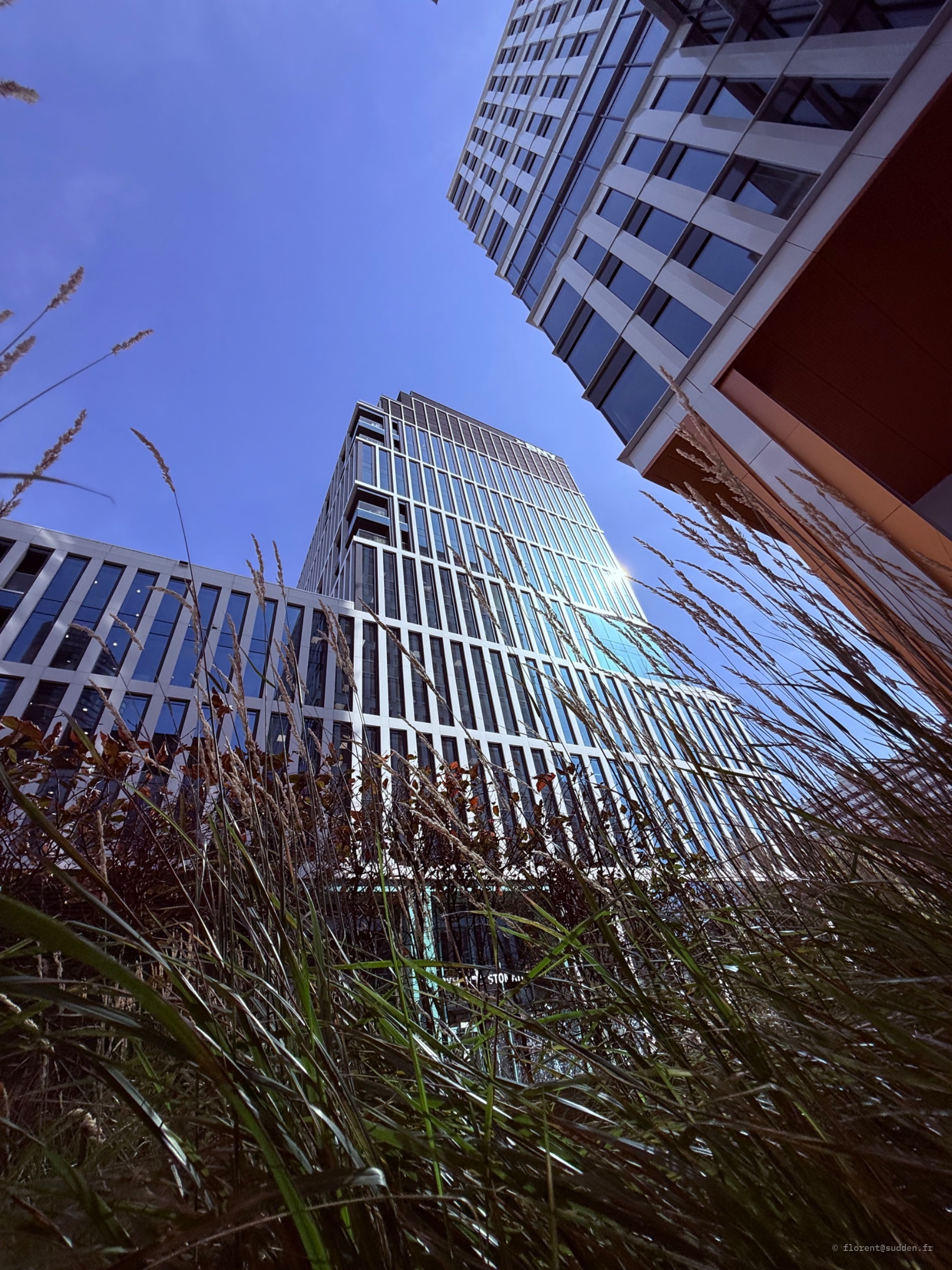
Quartier moderne Powstańców Śląskich, Wrocław
Modern Powstańców Śląskich District, Wrocław View of contemporary residential buildings in the Powstańców Śląskich district in Wrocław. Recent urban architecture characterized by glass and steel towers, with urban vegetation in the foreground. © florent@sudden.fr 2026-09-08 · 09:52 · 51.0958° N, 17.0219° E
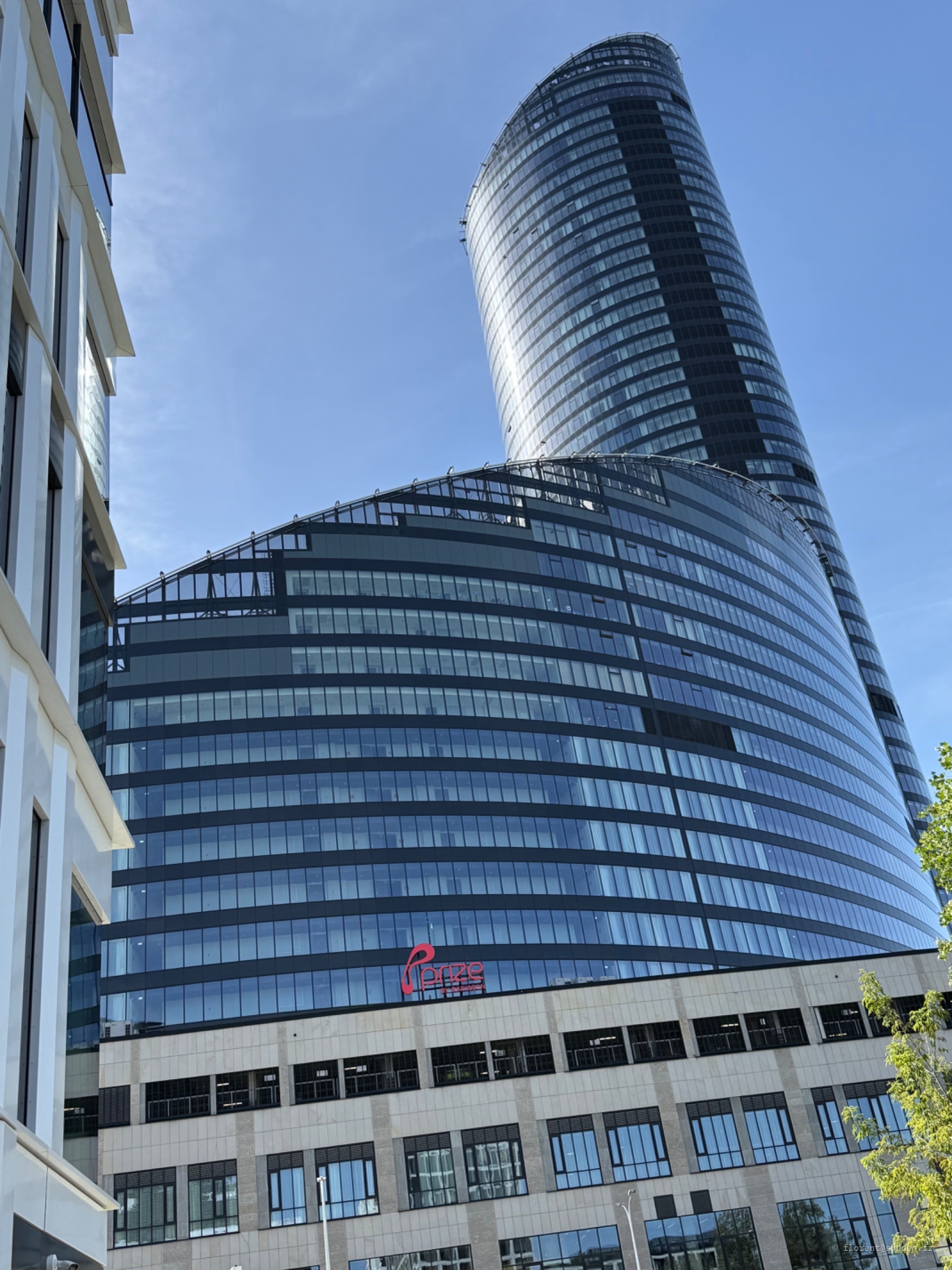
Complexe immobilier Wrocław, rue Szczęśliwa
Wrocław Real Estate Complex, Szczęśliwa Street Modern building with cylindrical tower and commercial base, located in the Powstańców Śląskich district in Wrocław. The architecture blends contemporary residential/commercial structure with the visible logo of a store. Location not identified with certainty regarding the exact name of the complex. © florent@sudden.fr 2026-09-08 · 09:53 · 51.0955° N, 17.0210° E

Read also

← Back to the journal