Prague, Monday 5 and Tuesday 6 October 2026
You come to Prague for its bridges and towers, and you photograph it in stone and red tiles. But in two days of walking, it was the metals that struck me. Each era of the city left its own, and you only need to look up to read them: copper, iron, bronze, steel, gold.
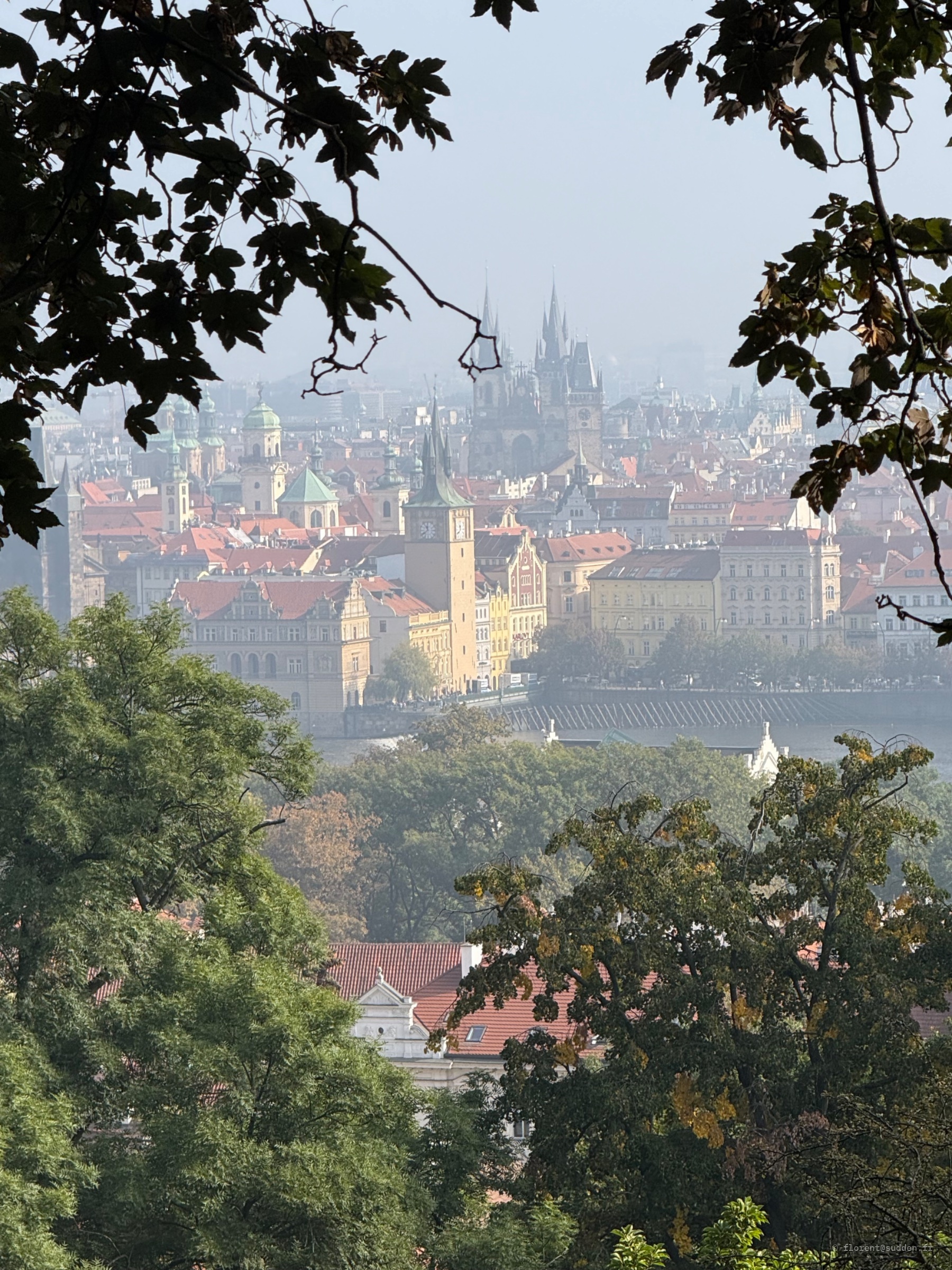
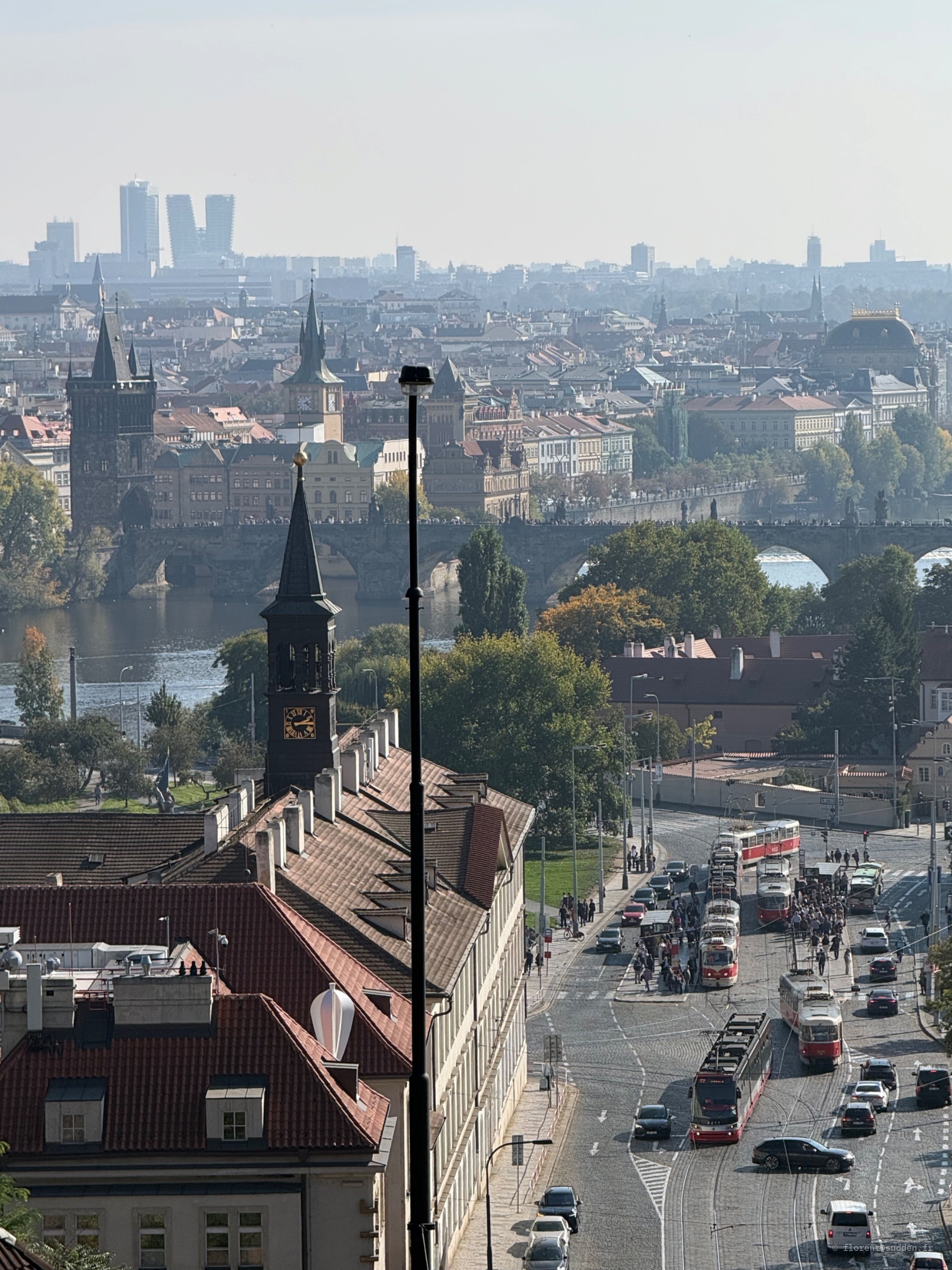
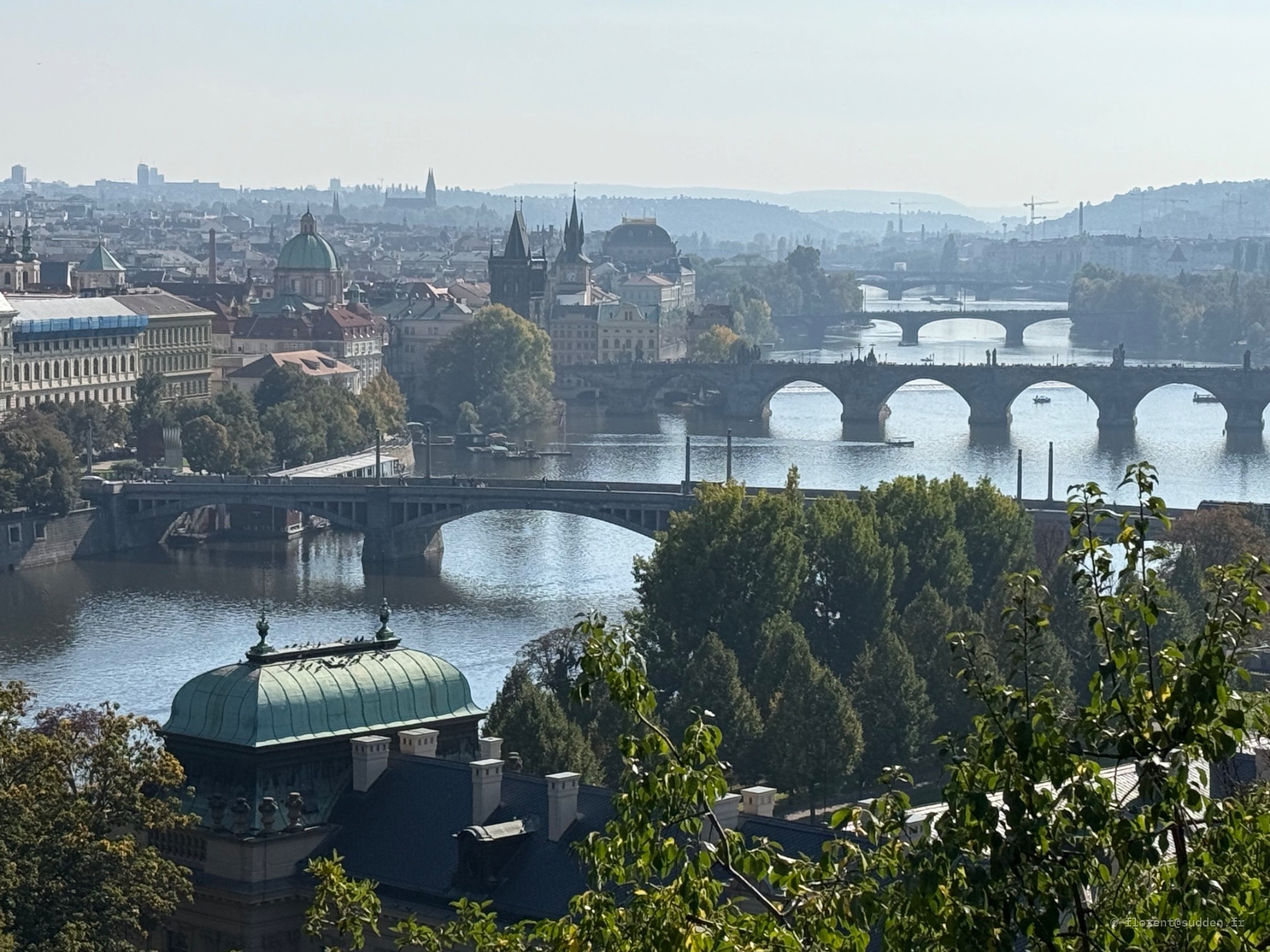
Copper, patinated. From the heights of Letná and Petřín, the greenish domes and roofs dominate the city. Copper took decades to shift from brown to green, and no one tried to stop it. In Prague, time is part of the decor.
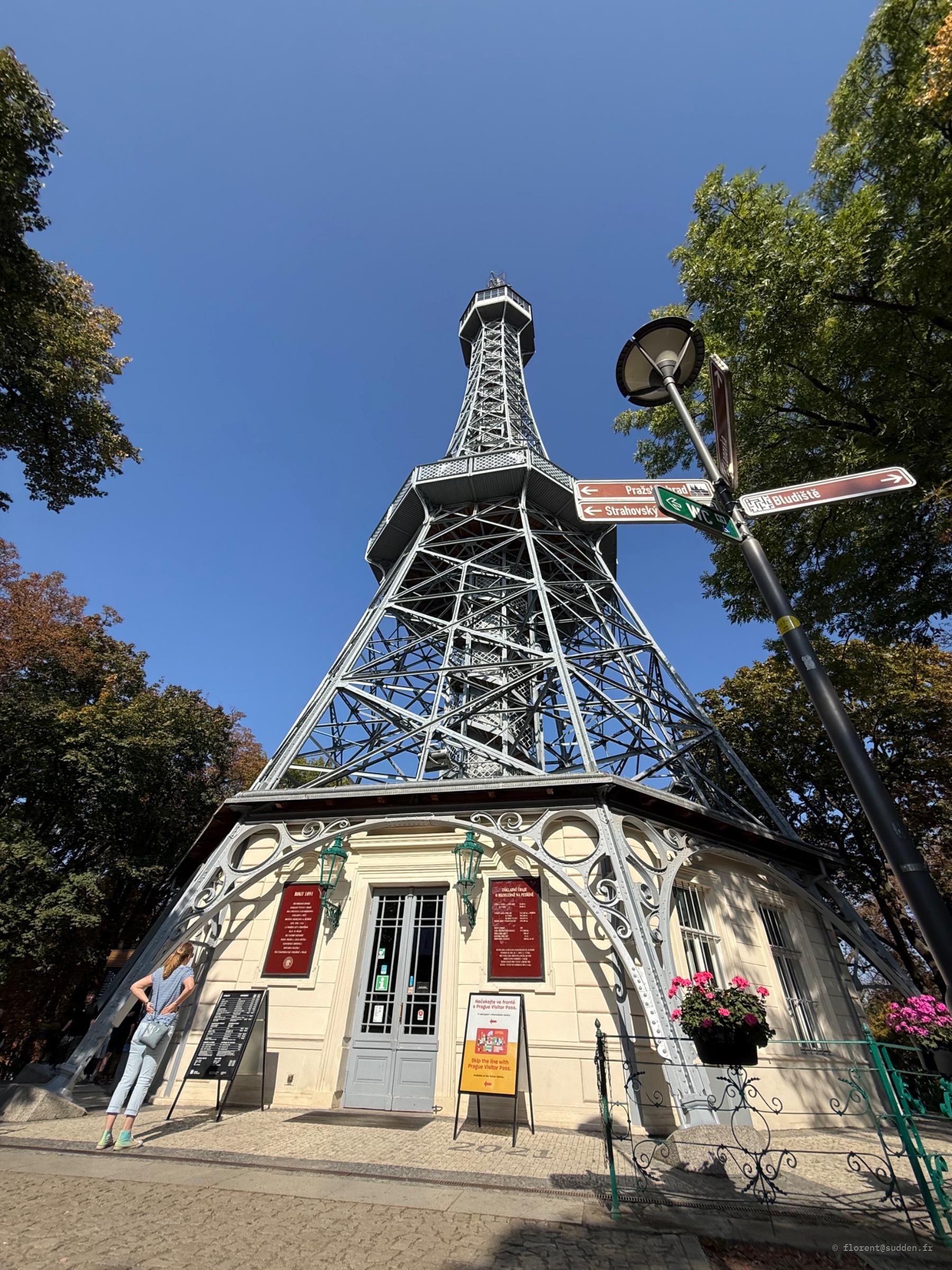
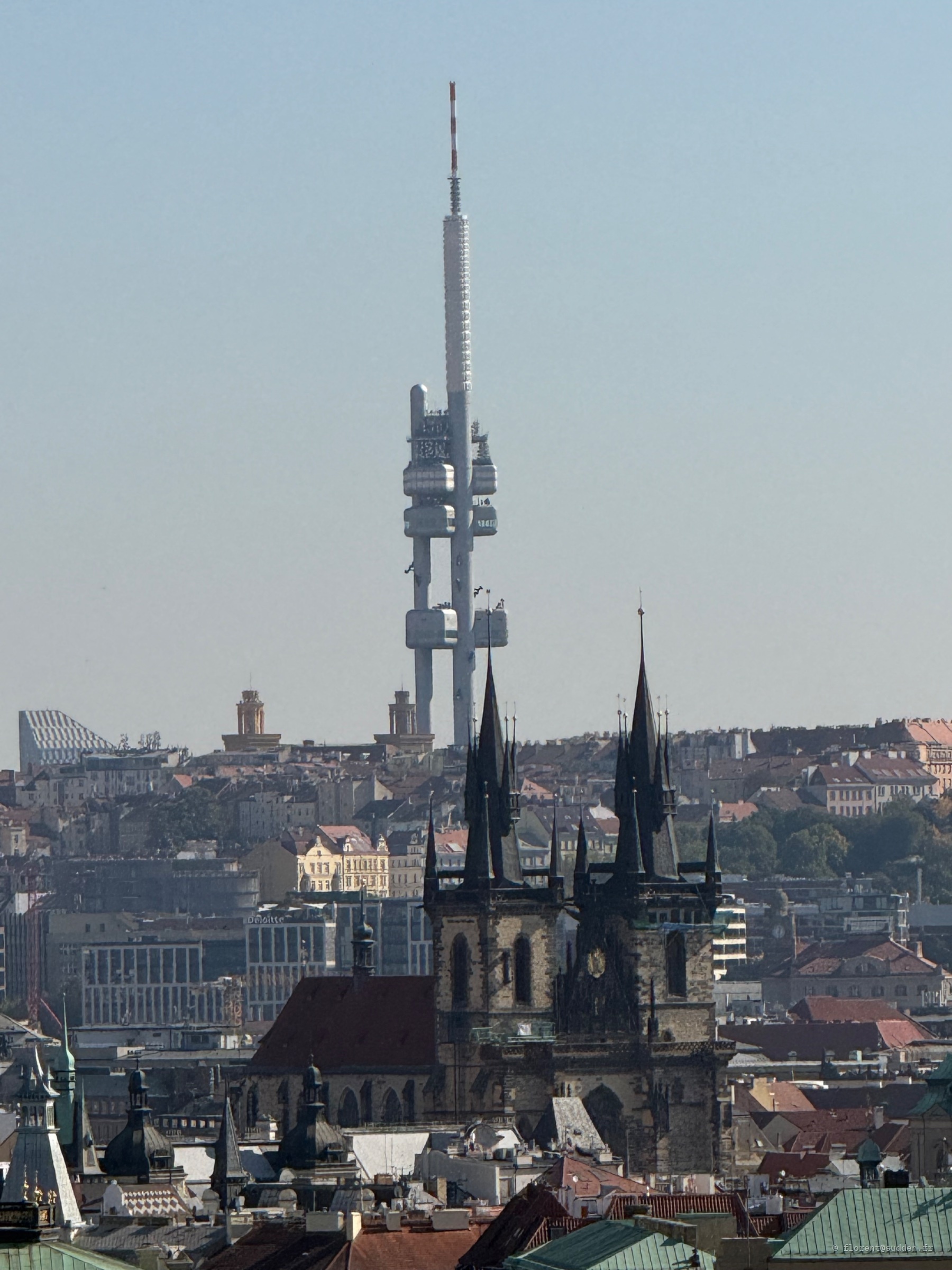
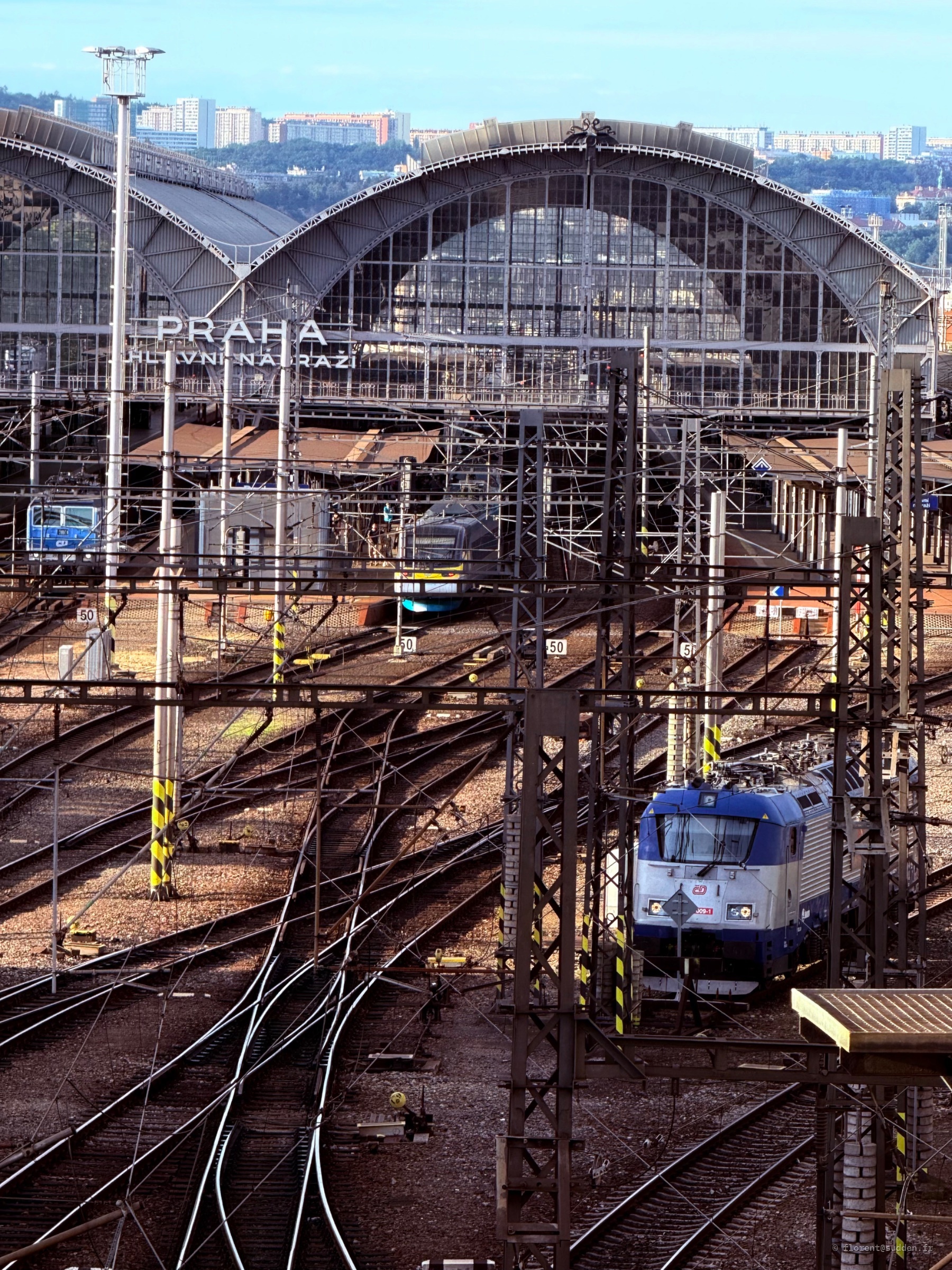
Iron, demonstrative. The Petřín Tower, erected in 1891, is the acknowledged little sister of the Eiffel Tower. A century later, the steel and concrete of the Žižkov television tower (1985-1992) took over for a city that loves to show itself. Between the two, the Gothic spires of Týn remind us that Prague has always built upward.
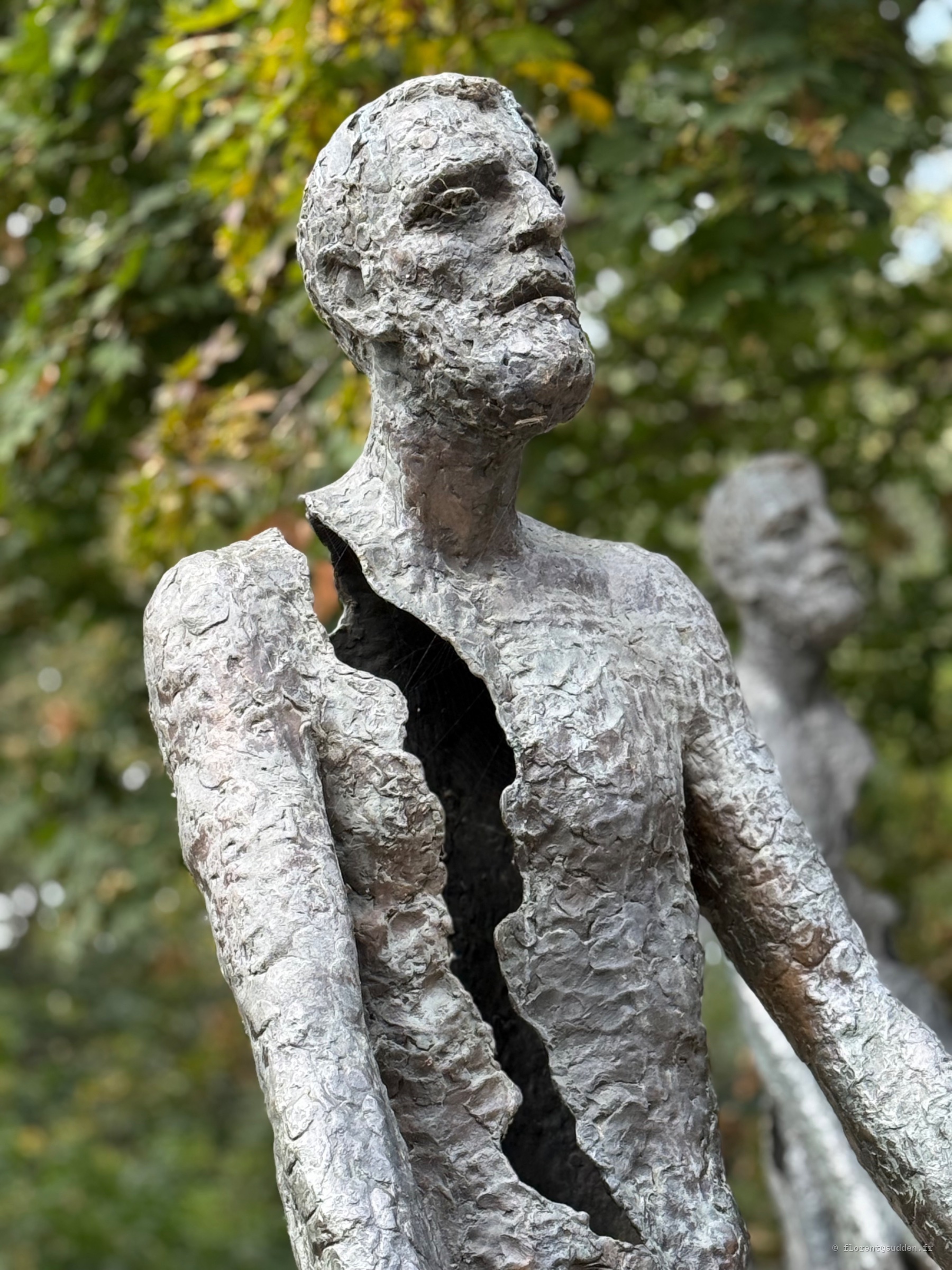
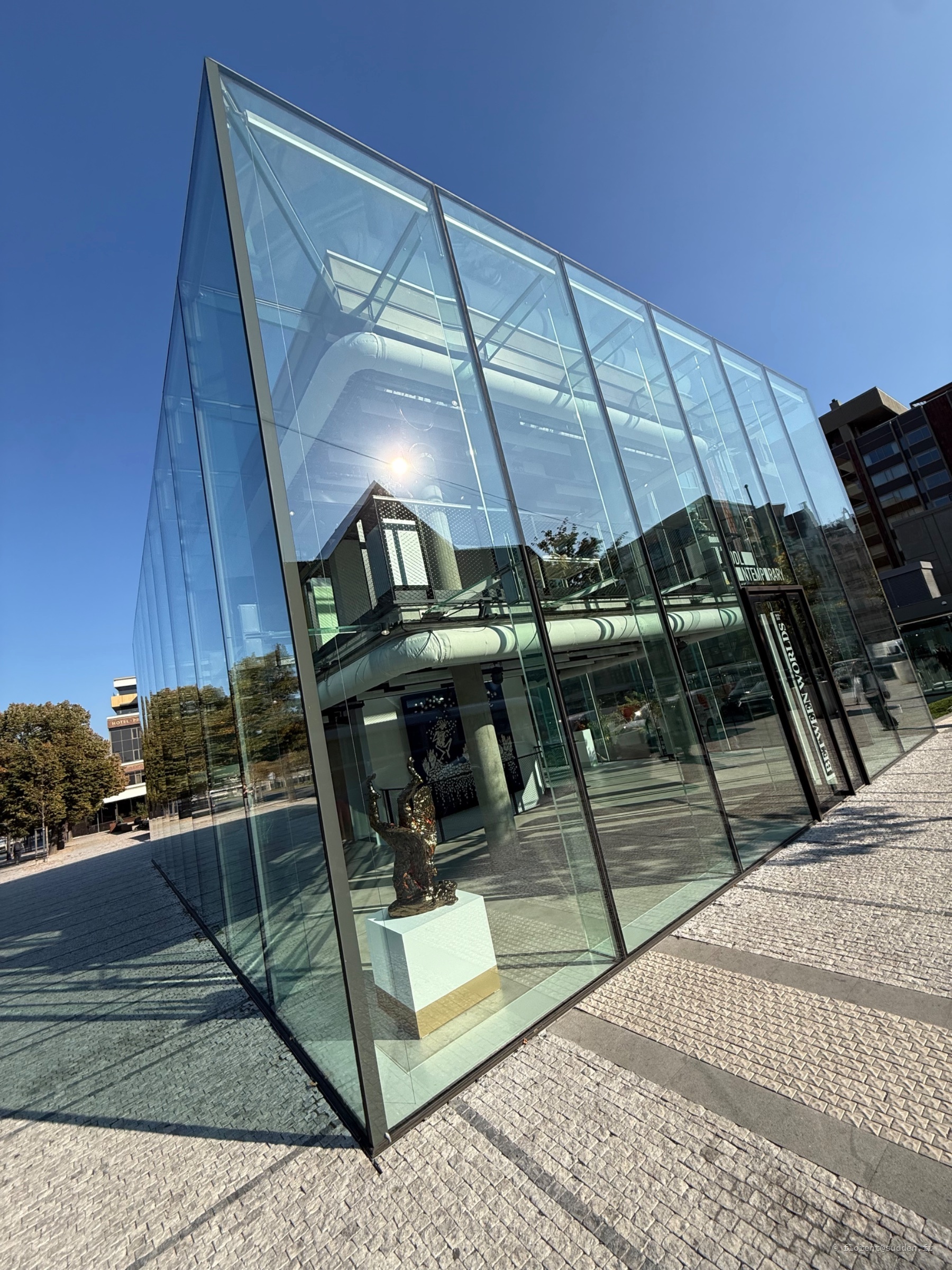
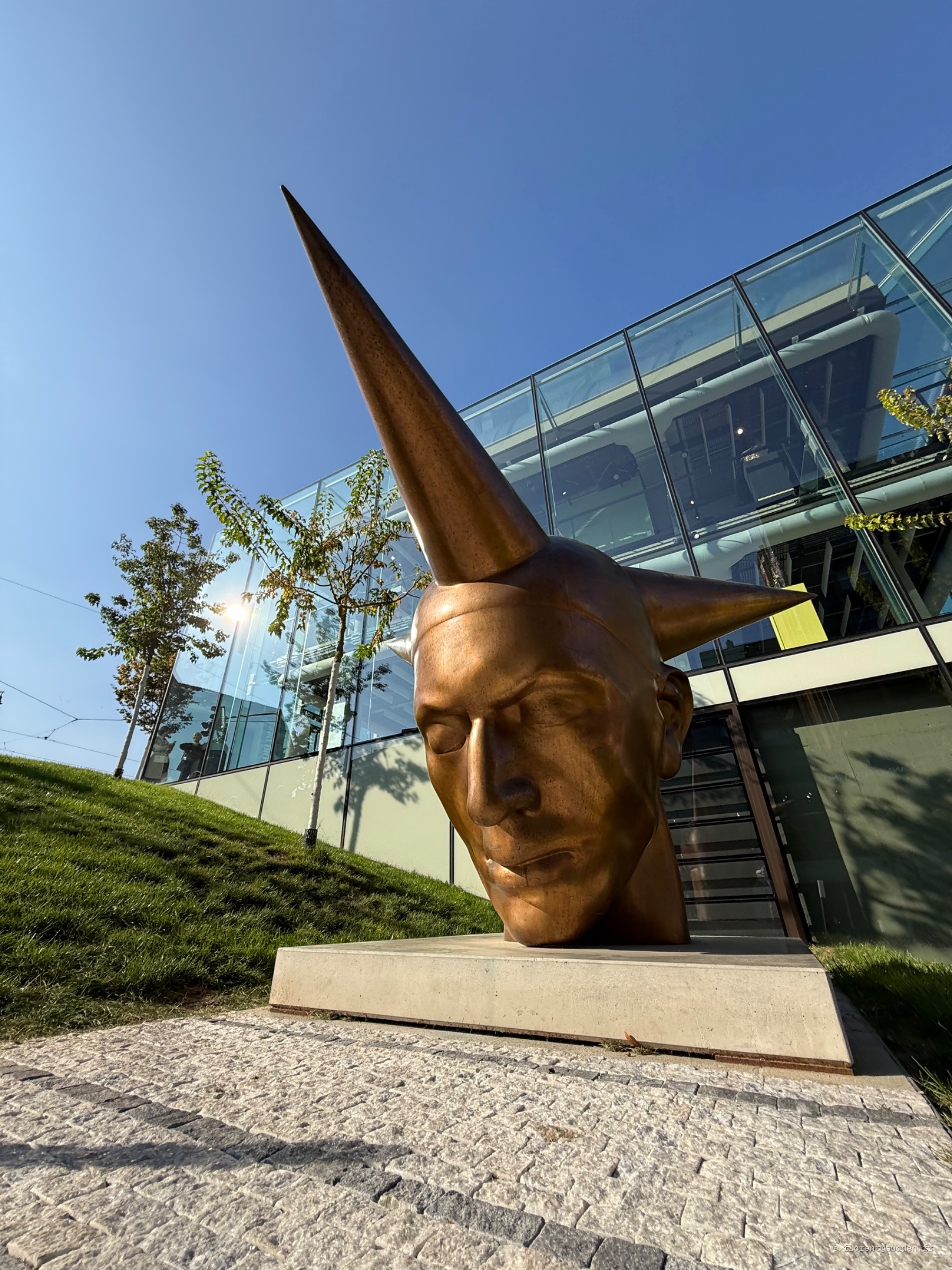
Bronze, which speaks. The city puts sculpture in the street, and bronze says grave or strange things there. At the foot of Petřín, the Memorial to the Victims of Communism shows silhouettes that crack and crumble as they descend the steps. Further on, in front of the Kodl Contemporary gallery, Dreamer by Martin Janecký: an immense head topped with spikes, in front of a glass façade. These works are not there to reassure.
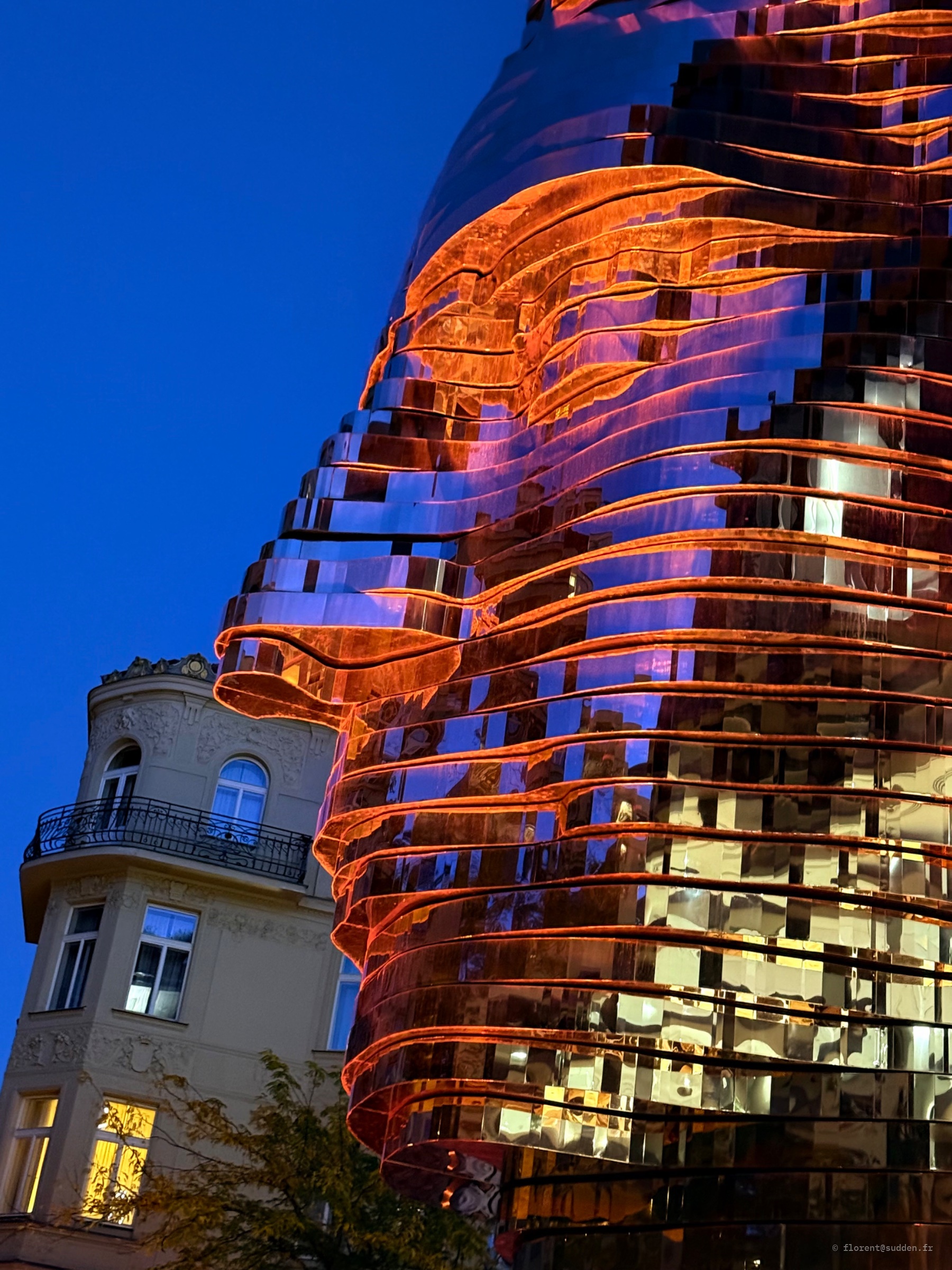
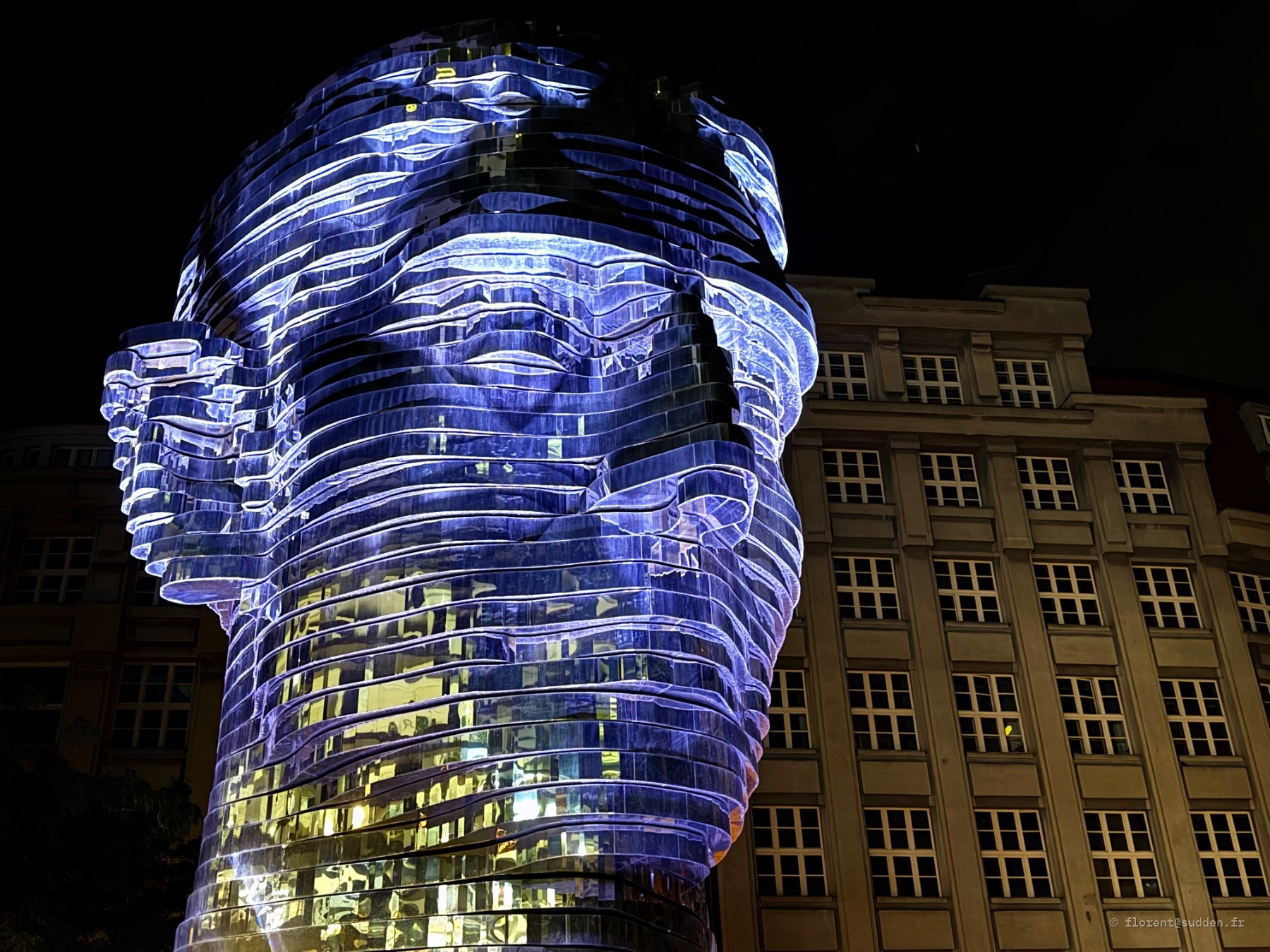
Mirror steel, which reflects. On Národní třída, in front of the Quadrio centre, the Head of Franz Kafka by David Černý is made of 42 levels of polished steel that each turn on their own. The face comes undone, recomposes itself, and the metal reflects everything around it: at sunset, the sculpture blazes with orange and violet. After the bronze that crumbles at the foot of Petřín, here is another fragmented body, but this one reconstitutes itself.
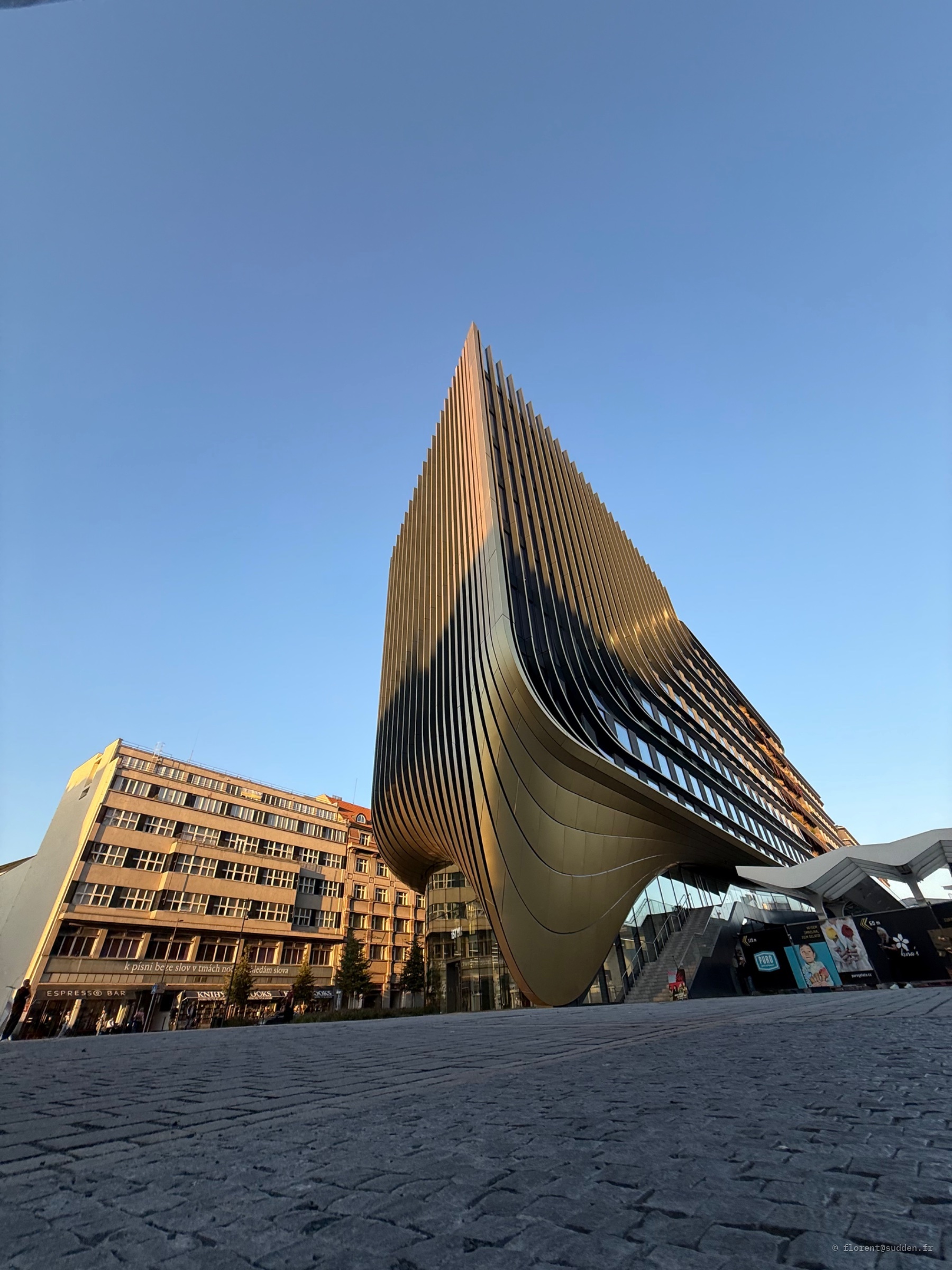
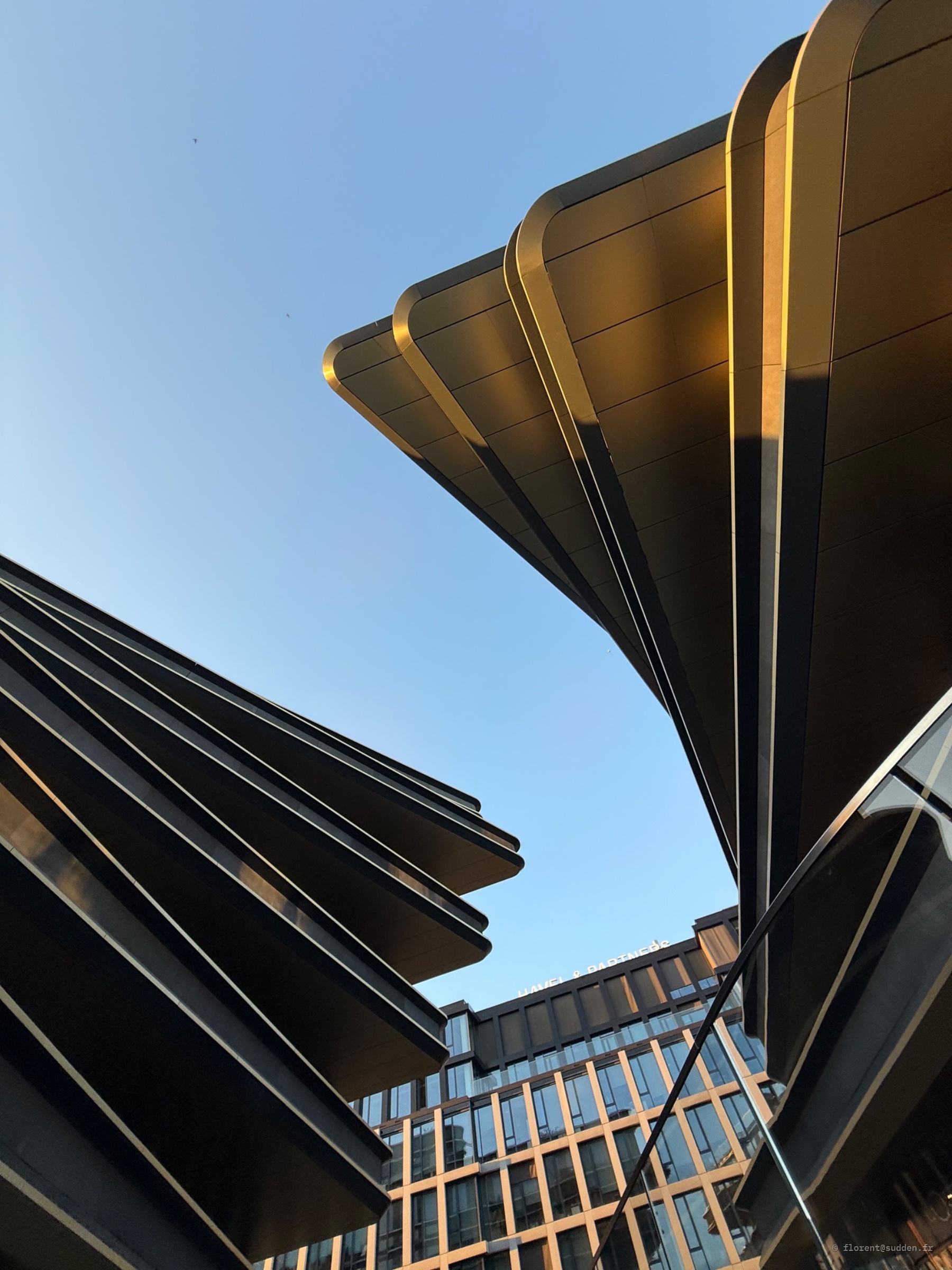
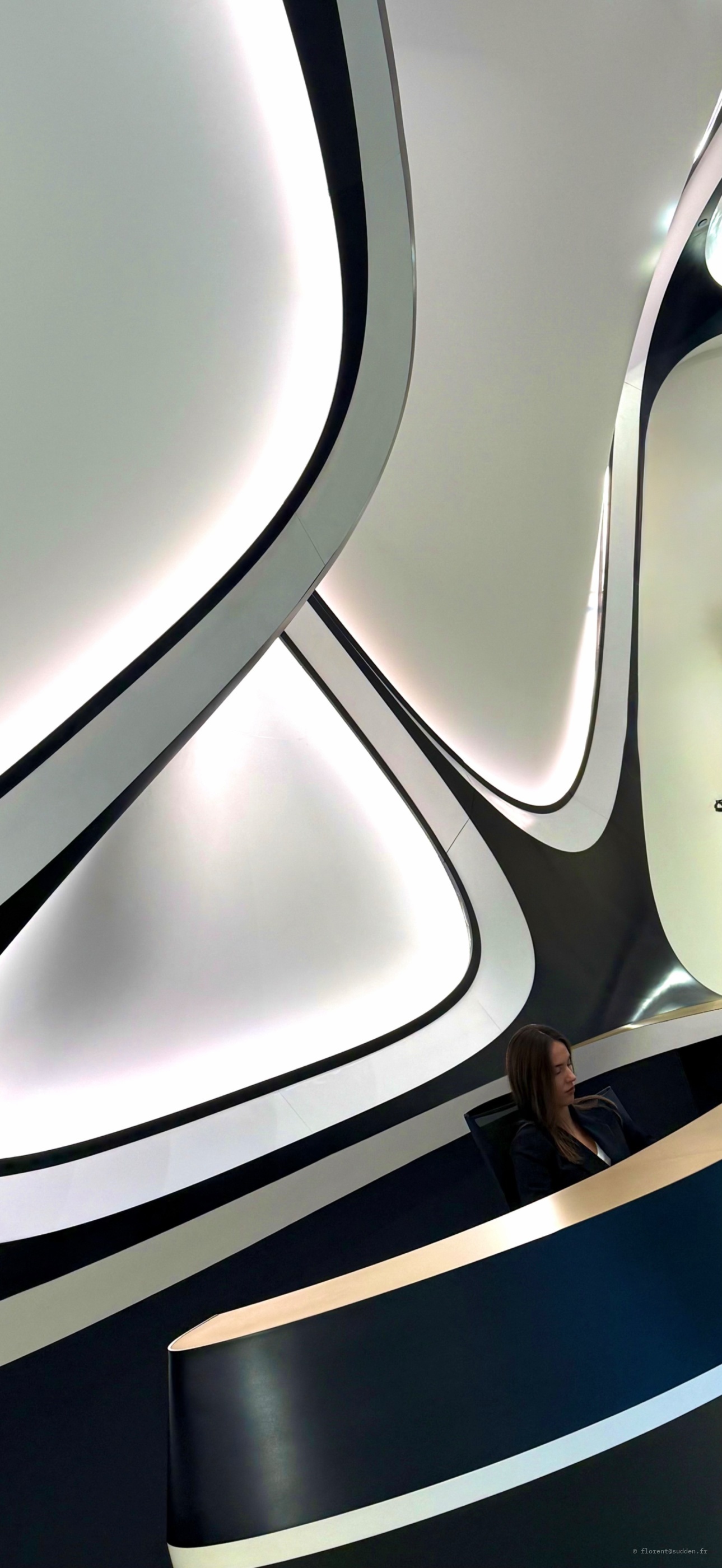
Gold, which shines. A kilometer from Old Town Square, the office buildings of Masaryčka, designed by Zaha Hadid Architects, wrap their golden strips above Masarykovo nádraží station. Gold is not there by chance: it responds to the gilding of the "city of a hundred steeples". Towards 6 p.m. in October, the low sun makes the façade change colour from one minute to the next. Inside, the hall extends the gesture in black and white curves, where you would expect right angles.
Why October. Fewer people, low light from late afternoon onwards, foliage turning yellow. It's the right month to read the city from copper to gold without being jostled.